 Histamine Tracker
Blueberry Basil Nice Cream

A simple frozen dessert that pairs sweet blueberries with fresh basil. More sorbet-like than traditional banana-based nice cream, with a refreshing tartness.
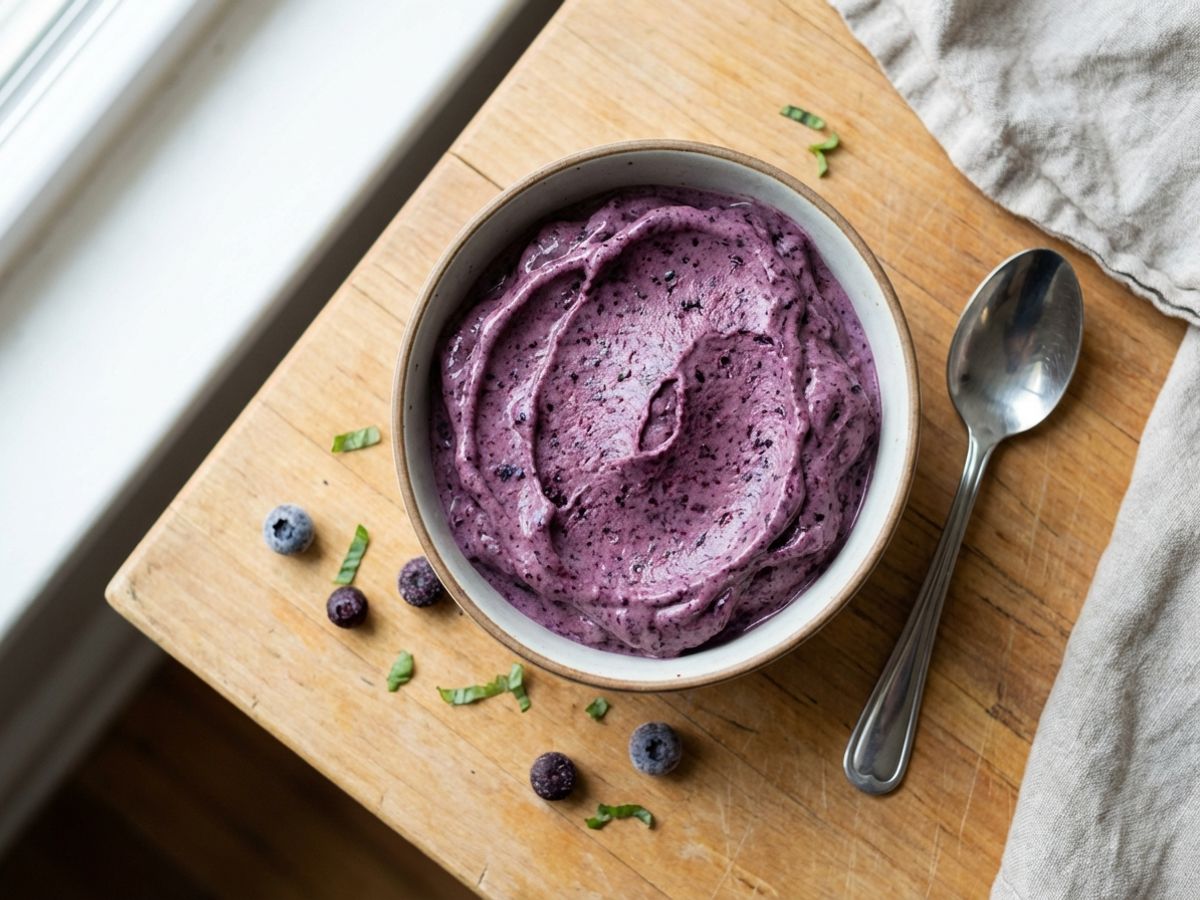
Ingredients
- 2 cups fresh blueberries, frozen
- 1/4 cup fresh basil leaves (about 15 large leaves)
- 1/4 teaspoon monk fruit powder
- 1/2 teaspoon amchur (mango) powder
- 1/2 cup water
Instructions
Prep the Blueberries
- Spread fresh blueberries in a single layer on a parchment-lined baking sheet.
- Freeze for at least 3 hours or overnight until solid.
Prep the Basil
- Wash basil leaves thoroughly and remove from stems.
- Pat dry with a clean towel.
Blend
- Add frozen blueberries, basil leaves, monk fruit, amchur powder, and water to a food processor or high-speed blender.
- Blend for about 1 minute, stopping to scrape down the sides at least once.
- Continue blending until smooth and creamy.
Serve
- For soft-serve consistency, enjoy immediately.
- For scoopable texture, transfer to a freezer-safe container and freeze for 30-60 minutes.
Tips & Substitutions
- High-speed blender or food processor recommended. Regular blenders may struggle with frozen fruit. If your blender struggles, let the blueberries sit for 5 minutes before blending.
- Freeze blueberries yourself. Buying pre-frozen blueberries is convenient, but freezing fresh berries the same day you buy them ensures maximum freshness.
- What is amchur powder? Amchur (also called amchoor) is dried unripe mango powder, commonly used in Indian cooking. It adds a pleasant tartness without using citrus. Find it at Indian grocery stores or online.
- Skip the basil? The recipe works without it, but you'll miss the interesting flavor complexity. Start with less basil if you're unsure.
- Adjust sweetness. Taste before adding more sweetener. Ripe blueberries are often sweet enough on their own.
- Want it creamier? Adding half a frozen, not-very-ripe banana creates a smoother texture. Bananas are moderate in histamine and can act as histamine liberators, especially when ripe. Use a small amount and only if you know you tolerate them.
Why This Works
Blueberries. Low in histamine and generally well tolerated. Blueberries contain anthocyanins, the pigments that give them their deep color, which have antioxidant properties.
Fresh basil. Also low in histamine and adds an unexpected herbal note that complements the berry sweetness. Most fresh herbs are well tolerated.
Amchur powder. Provides sourness without citrus, which can be problematic for some people with histamine intolerance. Made from dried unripe green mangoes. Some people tolerate it well as a citrus alternative, though individual sensitivity varies. Test in small amounts or omit if unsure.
Monk fruit. A natural sweetener that doesn't affect blood sugar. Well tolerated by most people with histamine intolerance.
No banana. Traditional nice cream relies on frozen bananas for creaminess, but bananas can act as histamine liberators for some people. Without banana, the texture is lighter and more sorbet-like.
Storage
Best enjoyed immediately for soft-serve texture. Can be frozen in an airtight container for up to 3 months, though more sensitive individuals may prefer to consume within 1-2 weeks. Let it sit at room temperature for 5-10 minutes before scooping, as it will harden significantly. Some people react to frozen foods even when properly stored, so pay attention to your own tolerance.
Not sure if an ingredient is safe? Histamine Tracker includes a database of 1,000+ foods with histamine ratings to help you cook with confidence.


For educational purposes only. Not medical advice. Consult a healthcare professional for personal guidance.
References
- 20 Low Histamine Fruits and Berries (With Recipes) — Through The Fibro Fog
- Monk Fruit: Anti-Inflammatory Sugar Free Sweetener — Healing Histamine
- Low Histamine Foods List — MastCell360
- Histamine and histamine intolerance — Maintz & Novak (2007)
- Histamine Intolerance: The Current State of the Art — Comas-Basté et al. (2020)
- Biogenic Amines in Plant-Origin Foods: Are They Frequently Underestimated in Low-Histamine Diets? — Sánchez-Pérez et al. (2021)
- Diamine Oxidase Supplementation Improves Symptoms in Patients with Histamine Intolerance — Schnedl et al. (2019)
- Histamine Intolerance — A Comprehensive Review — Jochum (2024)