 Histamine Tracker
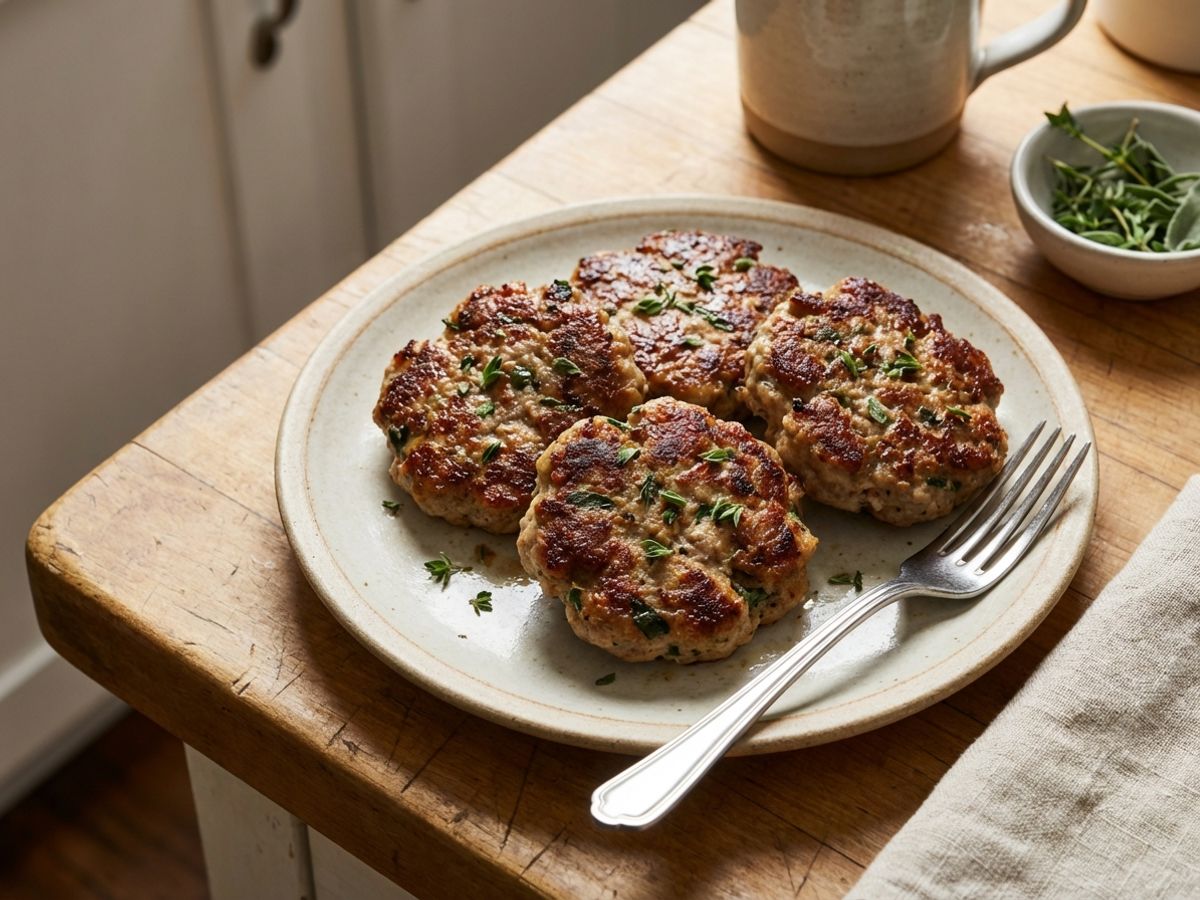
Fresh Herb Breakfast Sausage Patties

Homemade turkey sausage patties with sage and thyme.
Ingredients
- 1 pound fresh ground turkey (or chicken)
- 1 tablespoon fresh sage, finely chopped
- 1 teaspoon fresh thyme leaves
- 1/2 teaspoon sea salt
- 1/4 teaspoon black pepper (optional, omit if spices trigger symptoms)
- 1 tablespoon avocado oil or olive oil for cooking
Instructions
Mix
- Place the ground turkey in a large bowl.
- Add the sage, thyme, salt, and pepper if using.
- Mix gently with your hands until the herbs are evenly distributed. Do not overmix, as this can make the patties tough.
Shape
- Divide the mixture into 8 equal portions.
- Roll each portion into a ball, then flatten into a patty about 1/2-inch thick and 3 inches wide.
Cook
- Heat the oil in a large skillet over medium heat.
- Add the patties to the pan. Do not overcrowd.
- Cook for 4-5 minutes per side until golden brown and cooked through.
- The internal temperature should reach 165°F (74°C) for turkey.
- Serve immediately.
Tips & Substitutions
- Use fresh ground turkey or ask your butcher to grind it. The fresher the meat, the lower the histamine.
- Ground chicken works in place of turkey. Both have a mild flavor that pairs well with sage and thyme.
- For maple sausage flavor, add 1 tablespoon maple syrup. Mix it in with the herbs before shaping the patties.
- Don't overmix the meat. Overworking ground meat makes patties dense and tough. Gently combine until the herbs are just distributed.
- Omit black pepper if spices trigger symptoms. The sage and thyme provide plenty of flavor on their own.
Why This Works
Fresh ground turkey. Homemade patties avoid the preservatives, nitrates, and additives found in store-bought sausage. Freshness is critical since ground meat has a large surface area that can accumulate histamine quickly.
Fresh sage and thyme. Fresh herbs are generally well tolerated and provide classic sausage flavor without relying on pre-made spice blends that may contain problematic ingredients.
Olive oil or avocado oil. Both are stable cooking fats that are generally well tolerated and avoid the concerns of dairy-based butter.
Storage
Best eaten fresh right after cooking. For meal prep, cook the patties, let them cool quickly, and freeze within 1-2 hours. Reheat from frozen in a skillet over medium heat. Avoid refrigerating cooked patties for more than a few hours, as histamine can increase in cooked meat over time, especially with slow cooling or long storage.
Not sure if an ingredient is safe? Histamine Tracker includes a database of 1,000+ foods with histamine ratings to help you cook with confidence.


For educational purposes only. Not medical advice. Consult a healthcare professional for personal guidance.
References
- 5 High-Histamine Meats to Avoid with Histamine Intolerance — Histamine Doctor
- Easy Homemade Breakfast Sausage Recipe (Gluten & Top 9 Free) — The Allergy Chef
- Low Histamine Herbs and Spices (and Recipes to Enjoy!) — Through The Fibro Fog
- Histamine and histamine intolerance — Maintz & Novak (2007)
- Histamine Intolerance: The Current State of the Art — Comas-Basté et al. (2020)
- Biogenic Amines in Plant-Origin Foods: Are They Frequently Underestimated in Low-Histamine Diets? — Sánchez-Pérez et al. (2021)
- Diamine Oxidase Supplementation Improves Symptoms in Patients with Histamine Intolerance — Schnedl et al. (2019)
- Histamine Intolerance — A Comprehensive Review — Jochum (2024)