 Histamine Tracker
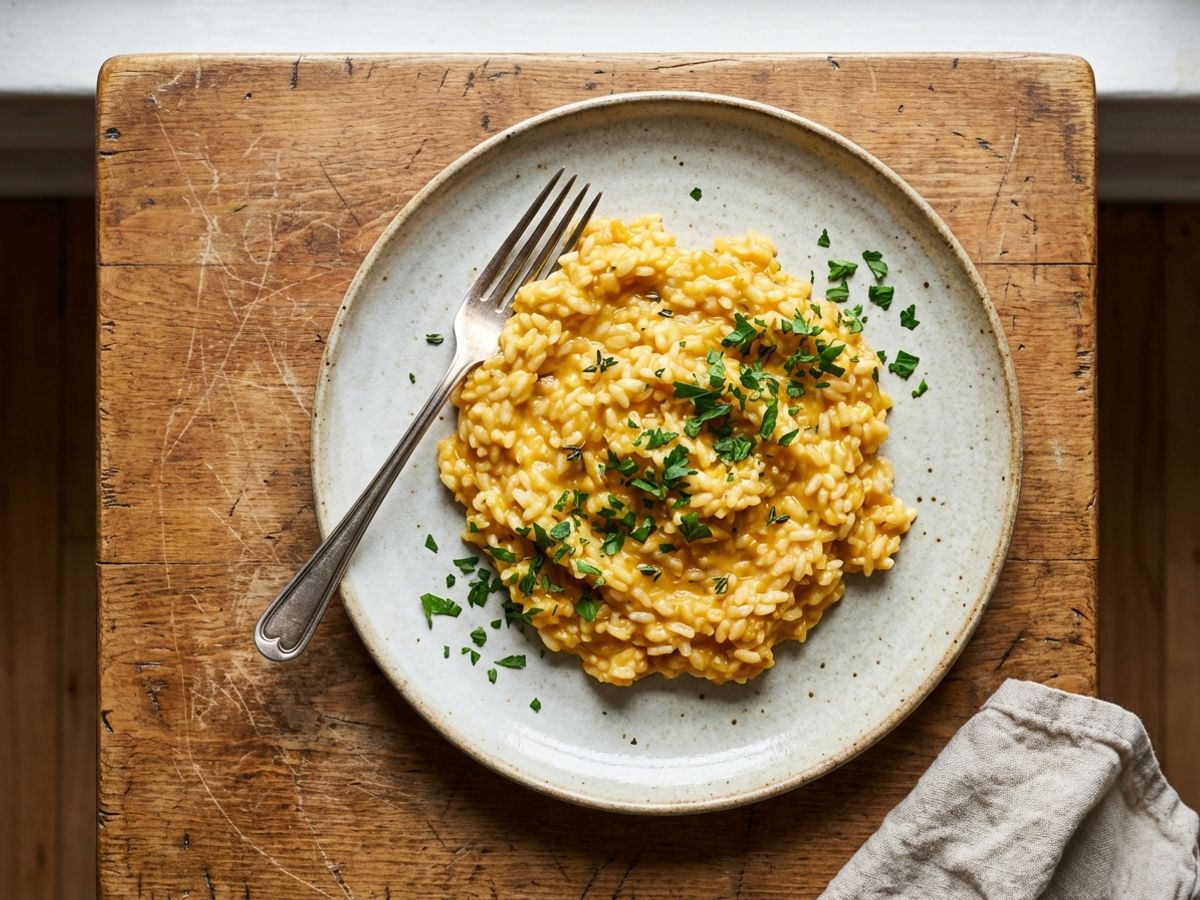
Carrot Risotto

Creamy risotto made with pureed carrots and thyme.
Ingredients
Carrot Puree
- 1 pound carrots, peeled and chopped
- 1 cup water
Risotto
- 1 1/2 cups arborio rice
- 5-6 cups warm vegetable or chicken broth (homemade preferred, see tips)
- 1 small onion, finely diced (optional)
- 2 tablespoons olive oil
- 2 tablespoons butter (or additional olive oil for dairy-free)
- 1 teaspoon fresh thyme leaves
- 1/2 teaspoon sea salt
- 1/4 teaspoon black pepper (optional)
- Fresh parsley for garnish
Instructions
Make the Carrot Puree
- Place the chopped carrots in a pot with 1 cup water.
- Bring to a boil, then reduce heat and simmer for 12-15 minutes until very tender.
- Drain, reserving the cooking liquid.
- Puree the carrots in a blender or food processor until smooth, adding reserved cooking liquid as needed to reach a smooth consistency.
- Set aside.
Prepare the Broth
- Warm the broth in a separate pot and keep it at a gentle simmer.
Cook the Risotto
- Heat olive oil in a large, heavy-bottomed pot or Dutch oven over medium heat.
- If using onion, add it now and cook for 5-7 minutes until softened and translucent.
- Add the arborio rice and stir to coat with oil. Toast for 1-2 minutes until the edges become slightly translucent.
- Add 1 cup of warm broth and stir frequently until the liquid is mostly absorbed.
- Continue adding broth one ladle (about 1/2 cup) at a time, stirring frequently and waiting until each addition is mostly absorbed before adding more.
- After about 15 minutes, stir in the carrot puree (warm it briefly if it has cooled).
- Continue adding broth and stirring until the rice is creamy and al dente, about 18-22 minutes total.
- Remove from heat and stir in the butter, thyme, salt, and pepper if using.
Serve
- Divide among bowls.
- Garnish with fresh parsley and additional thyme if desired.
- Serve immediately.
Tips & Substitutions
- Use homemade chicken broth or vegetable broth. Broth is the biggest histamine variable in this recipe. Use very fresh broth that was cooled quickly and frozen the same day. Store-bought works but check labels for yeast extract, wine, or other additives.
- Keep the broth warm. Adding cold broth to risotto slows cooking and can make the texture gummy.
- Stir frequently but not constantly. Every minute or so is enough to develop creaminess without overworking the starch.
- Omit the onion if it bothers you. Onions contain quercetin but can also act as histamine liberators for some people.
- This skips white wine and parmesan that traditional risotto uses. The carrot puree adds body and creaminess instead.
Why This Works
Carrots. Naturally low in histamine and generally well tolerated. Pureeing them adds a creamy texture that replaces the need for aged cheese.
Arborio rice. A low histamine grain that creates natural creaminess through its starch content. No dairy needed to achieve the classic risotto texture.
Onion (optional). Contains quercetin, a compound sometimes discussed in mast cell research. However, onions can act as histamine liberators for some people, so this ingredient is optional.
Olive oil. A well-tolerated fat that adds richness. This recipe skips parmesan, which as an aged dairy product is a common trigger.
Fresh thyme and parsley. Fresh herbs are generally well tolerated and add flavor without the concerns of long-stored dried spices.
Storage
Best eaten immediately while the risotto is creamy. Risotto thickens as it cools and reheats poorly. If you do save leftovers, refrigerate within 30 minutes and eat within 24 hours, as the broth base means histamine can build up over time.
Not sure if an ingredient is safe? Histamine Tracker includes a database of 1,000+ foods with histamine ratings to help you cook with confidence.


For educational purposes only. Not medical advice. Consult a healthcare professional for personal guidance.
References
- Are You Getting Enough Vegetables on a Low Histamine Diet? — Happy Without Histamine
- Are Onions High Histamine? — Snuggy Mom
- Is Olive Oil High In Histamine — Casa de Sante
- Histamine and histamine intolerance — Maintz & Novak (2007)
- Histamine Intolerance: The Current State of the Art — Comas-Basté et al. (2020)
- Biogenic Amines in Plant-Origin Foods: Are They Frequently Underestimated in Low-Histamine Diets? — Sánchez-Pérez et al. (2021)
- Diamine Oxidase Supplementation Improves Symptoms in Patients with Histamine Intolerance — Schnedl et al. (2019)
- Histamine Intolerance — A Comprehensive Review — Jochum (2024)