 Histamine Tracker
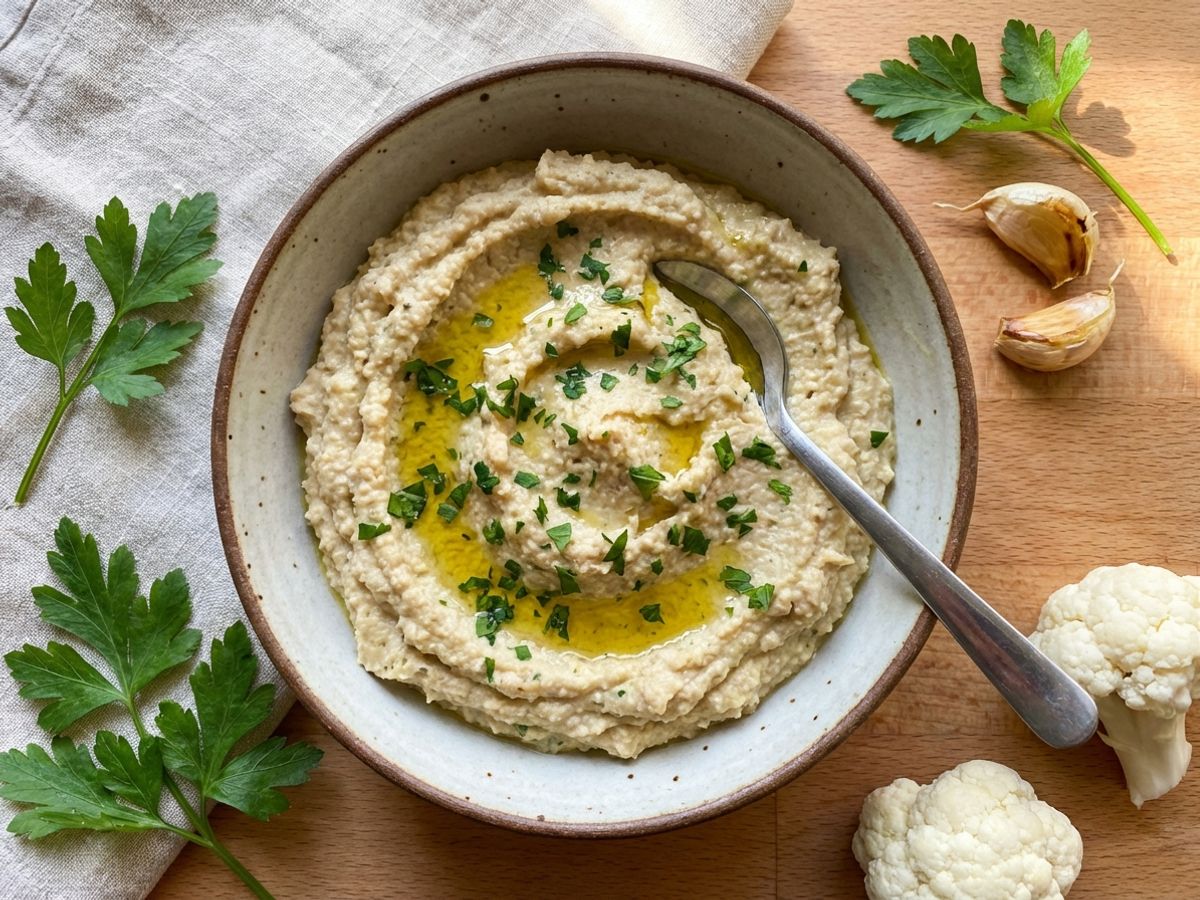
Cauliflower Hummus

This roasted cauliflower dip has all the creaminess of traditional hummus without the chickpeas. Great with fresh vegetables or gluten-free crackers.
Ingredients
- 1 medium head cauliflower (about 2 pounds), cut into florets
- 1 head garlic
- 6 tablespoons olive oil, divided
- 1 teaspoon salt, divided
- 2 tablespoons fresh parsley, chopped (for garnish)
- Extra olive oil for drizzling (optional)
Instructions
Roast the Garlic
- Preheat your oven to 400°F (200°C).
- Remove most of the papery outer skin from the garlic head, keeping it intact.
- Slice off the top to expose the cloves.
- Place on a small piece of foil, drizzle with 1 tablespoon of the olive oil, and wrap loosely.
- Roast for 30-40 minutes until cloves are soft, golden, and squeeze easily from their skins.
Roast the Cauliflower
- While the garlic roasts, toss cauliflower florets with 2 tablespoons of the olive oil and 1/2 teaspoon of the salt.
- Spread on a parchment-lined baking sheet in a single layer.
- Roast for 25-30 minutes until tender and lightly browned, flipping halfway through.
Blend
- Let the cauliflower and garlic cool for 5 minutes.
- Squeeze the soft garlic cloves out of their skins into a food processor or high-speed blender.
- Add the roasted cauliflower, remaining 3 tablespoons olive oil, and remaining 1/2 teaspoon salt.
- Blend on high until completely smooth, scraping down the sides as needed. Add a splash of water if needed to reach your desired consistency.
Serve
Transfer to a serving bowl. Drizzle with olive oil and sprinkle with fresh parsley. Serve warm or at room temperature with fresh vegetable sticks or gluten-free crackers.
Tips & Substitutions
- Roast the garlic and cauliflower on the same baking sheet to save time and reduce cleanup.
- Skip the garlic if it is a trigger. The roasted cauliflower carries enough flavor on its own. Garlic contains quercetin, a compound sometimes discussed in mast cell research, but it can also act as a histamine liberator for some people.
- Add roasted carrots for a sweeter dip. Toss 1-2 peeled and chopped carrots with the cauliflower before roasting.
- Swap olive oil for macadamia nut oil if you want a milder flavor.
- A high-speed blender gives the smoothest texture. A food processor works too, but you may need to scrape down the sides more often.
Why This Works
Cauliflower. Naturally low in histamine and generally well tolerated. It blends into a creamy base that replaces chickpeas, which can cause digestive issues for some people.
Roasted garlic. Roasting mellows the flavor and may improve tolerance compared to raw garlic. That said, garlic can act as a histamine liberator for some, so it is listed as optional.
Olive oil. Generally well tolerated and provides the rich, smooth mouthfeel that makes this dip satisfying.
No chickpeas. Traditional hummus relies on chickpeas, which are legumes that some people with histamine intolerance find difficult to digest. This version skips them entirely.
Freshness. Eating this dip fresh is always the best approach for keeping histamine levels as low as possible.
Storage
Best eaten fresh the same day. If you have leftovers, refrigerate in a sealed container and use within 1-2 days. The dip may thicken when cold, so stir in a splash of water or olive oil before serving. This is generally lower risk than meat or fish leftovers, but fresh is always preferred.
Not sure if an ingredient is safe? Histamine Tracker includes a database of 1,000+ foods with histamine ratings to help you cook with confidence.


For educational purposes only. Not medical advice. Consult a healthcare professional for personal guidance.
References
- Cauliflower Hummus (without Chickpeas) — Through The Fibro Fog
- Cauliflower Hummus Recipe (Low Lectin, Histamine & Oxalate) — Mast Cell 360
- 15 Low Histamine Oils for Cooking or Baking — Low Histamine Eats
- Histamine and histamine intolerance — Maintz & Novak (2007)
- Histamine Intolerance: The Current State of the Art — Comas-Basté et al. (2020)
- Biogenic Amines in Plant-Origin Foods: Are They Frequently Underestimated in Low-Histamine Diets? — Sánchez-Pérez et al. (2021)
- Diamine Oxidase Supplementation Improves Symptoms in Patients with Histamine Intolerance — Schnedl et al. (2019)
- Histamine Intolerance — A Comprehensive Review — Jochum (2024)