 Histamine Tracker
Chicken and Rice Casserole

A simple weeknight dinner that cooks in one pan.
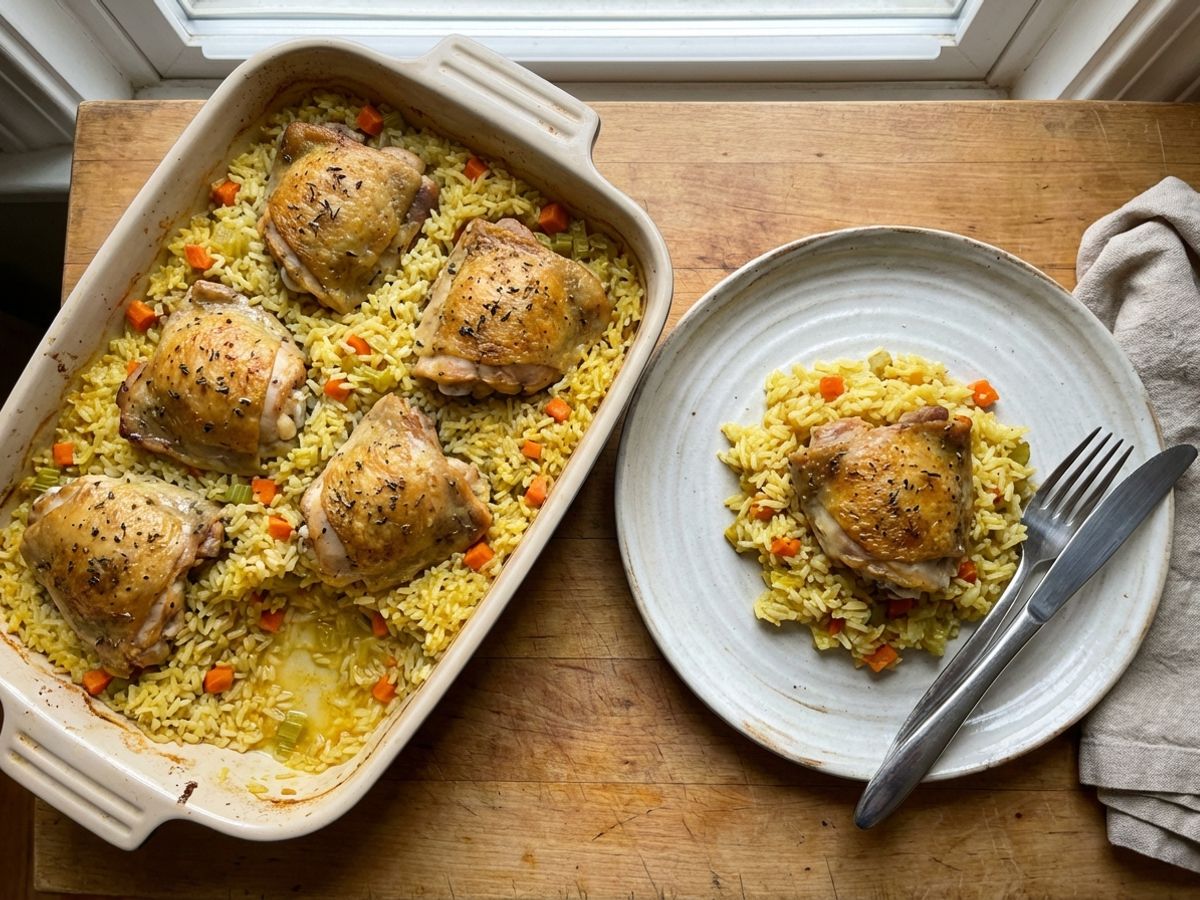
Ingredients
For the Rice
- 1 1/2 cups white rice, rinsed
- 2 1/2 cups low sodium chicken broth (homemade preferred)
- 1 tablespoon olive oil
- 1/2 teaspoon sea salt
- 1/4 teaspoon ground turmeric (optional, for color)
For the Chicken
- 4 bone-in, skin-on chicken thighs (about 1.5 lbs)
- 1 tablespoon olive oil
- 1/2 teaspoon sea salt
- 1/4 teaspoon black pepper (optional)
- 1/2 teaspoon dried thyme
- 1/2 teaspoon garlic powder (optional)
For the Vegetables
- 2 medium carrots, diced
- 2 celery stalks, diced
- 1/2 cup fresh or frozen peas (optional)
- 2 tablespoons fresh parsley, chopped
Instructions
Prepare the Casserole
- Preheat your oven to 375°F (190°C).
- In a 9x13 inch baking dish, combine the rinsed rice, chicken broth, olive oil, salt, and turmeric if using.
- Stir in the diced carrots and celery.
- Spread the mixture evenly across the dish.
Season the Chicken
- Pat the chicken thighs dry with paper towels.
- Rub each thigh with olive oil.
- Mix the salt, pepper if using, thyme, and garlic powder in a small bowl.
- Season both sides of each chicken thigh with the spice mixture.
- Place the chicken thighs skin-side up on top of the rice mixture.
Bake
- Cover the baking dish tightly with foil.
- Bake for 35 minutes.
- Remove the foil and add peas if using, tucking them into the rice around the chicken.
- Bake uncovered for another 15-20 minutes until the chicken skin is golden and the internal temperature reaches 165°F (74°C).
- Let rest for 5 minutes before serving.
- Garnish with fresh parsley.
Tips & Substitutions
- Use fresh chicken. Buy same-day from a trusted source for the lowest histamine load.
- For even lower histamine, place frozen chicken thighs directly on the rice and add 15-20 minutes to baking time.
- This skips the canned soup that traditional casserole recipes use. The broth and vegetables create moisture and flavor instead.
- Use very fresh broth. Homemade works well if it was made from fresh ingredients, cooled quickly, and used or frozen the same day. Long-simmered bone broth can be higher in histamine. Store-bought works if you check labels for yeast extract or other additives.
- Boneless, skinless thighs work too. Reduce baking time by about 10 minutes and check the internal temperature.
Why This Works
Fresh chicken. When bought fresh and cooked right away, chicken is generally well tolerated. Bone-in thighs stay moist during the longer baking time.
White rice. Naturally low in histamine and one of the most commonly tolerated grains. It absorbs the broth and becomes tender during baking.
Carrots and celery. Both are naturally low in histamine and add flavor and nutrition to the casserole without increasing histamine load.
Turmeric (optional). Generally well tolerated and adds a warm golden color. Some people find it may support overall anti-inflammatory health, though individual response varies.
Fresh parsley. Fresh herbs are generally well tolerated and provide a bright finish to the dish.
Storage
Best eaten fresh from the oven. As a protein-based dish, this casserole accumulates histamine as it sits. If you need to store leftovers, refrigerate within 30 minutes and eat within 24 hours. You can also portion and freeze immediately after cooking for longer storage.
Not sure if an ingredient is safe? Histamine Tracker includes a database of 1,000+ foods with histamine ratings to help you cook with confidence.


For educational purposes only. Not medical advice. Consult a healthcare professional for personal guidance.
References
- 5 High-Histamine Meats to Avoid with Histamine Intolerance — Histamine Doctor
- Low Histamine Diet: Foods to Eat and Avoid — Wyndly
- Is Turmeric High in Histamine — Casa de Sante
- Histamine and histamine intolerance — Maintz & Novak (2007)
- Histamine Intolerance: The Current State of the Art — Comas-Basté et al. (2020)
- Biogenic Amines in Plant-Origin Foods: Are They Frequently Underestimated in Low-Histamine Diets? — Sánchez-Pérez et al. (2021)
- Diamine Oxidase Supplementation Improves Symptoms in Patients with Histamine Intolerance — Schnedl et al. (2019)
- Histamine Intolerance — A Comprehensive Review — Jochum (2024)