 Histamine Tracker
Chicken and Rice Soup

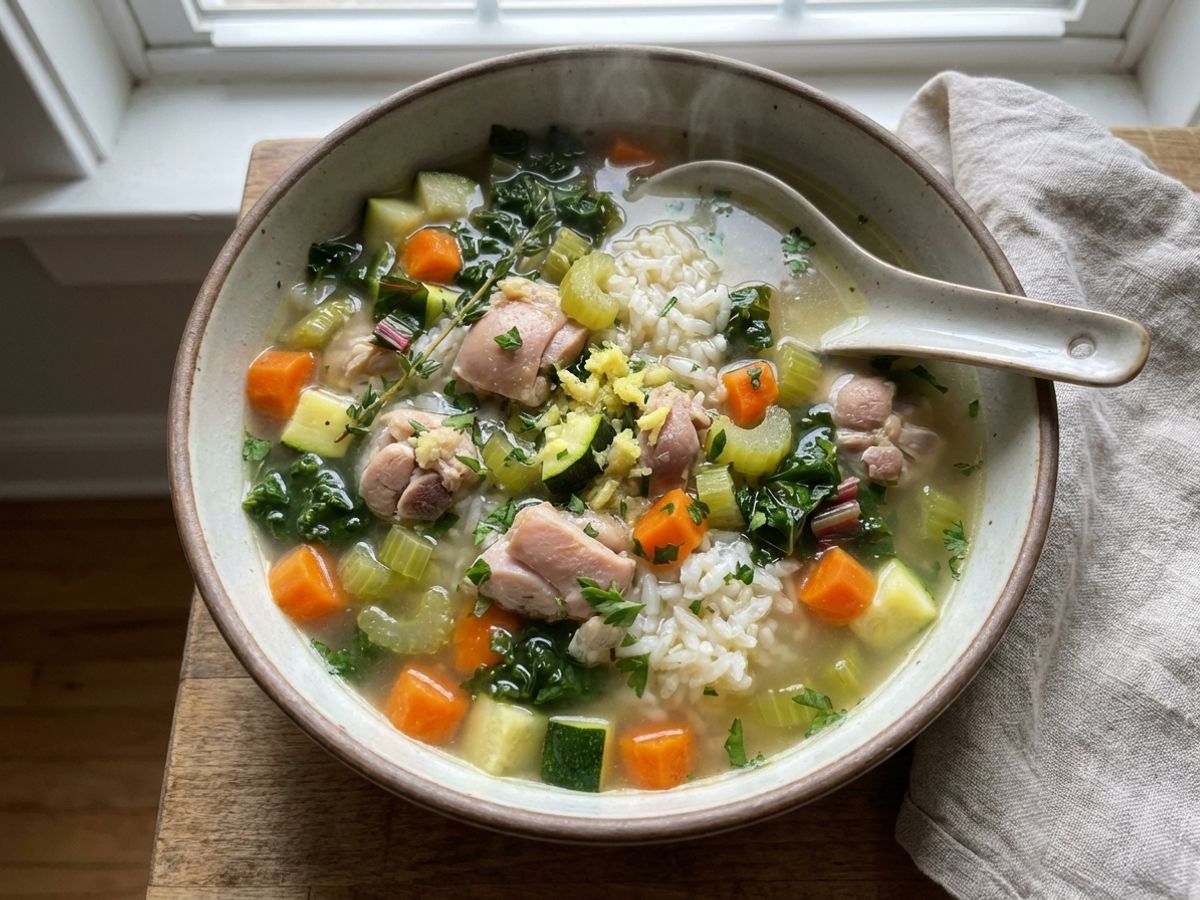
Chicken soup with rice and vegetables.
Ingredients
- 1 pound boneless, skinless chicken thighs (or breast), cut into bite-sized pieces
- 1/2 cup white rice (basmati or jasmine)
- 8 cups filtered water
- 2 tablespoons olive oil or coconut oil
- 3 medium carrots, diced
- 2 celery stalks, sliced
- 1 medium zucchini, diced
- 1 tablespoon fresh ginger, grated
- 1 teaspoon fresh thyme leaves (or 1/2 teaspoon dried)
- 1 bay leaf
- 1 teaspoon sea salt, or to taste
- Fresh parsley, chopped (for garnish)
Optional
- 1 medium onion, diced (if tolerated)
- 2 cloves garlic, minced (if tolerated)
- 2 cups kale, butter lettuce, or mild greens, chopped (added at the end)
Instructions
Prep
- Cut chicken into bite-sized pieces.
- Dice carrots, celery, and zucchini.
- Grate fresh ginger.
- Rinse rice in cold water until water runs clear.
Build the Soup
- Warm oil in a large pot over medium heat.
- Add carrots and celery. Cook for 4-5 minutes until slightly softened.
- Add ginger and stir for 1 minute until fragrant.
- Add chicken pieces and cook for 2-3 minutes, stirring occasionally.
Simmer
- Pour in filtered water. Add thyme, bay leaf, and salt.
- Bring to a boil, then reduce heat to medium-low.
- Add rice and zucchini. Stir to distribute.
- Cover and simmer for 20 minutes until rice is tender and chicken is cooked through.
Finish
- Remove bay leaf and discard.
- If adding greens, stir them in and cook for 1-2 minutes to wilt.
- Taste and adjust salt as needed.
- Ladle into bowls and garnish with fresh parsley.
Tips & Substitutions
- Use fresh chicken only. Never use leftover or rotisserie chicken, which has had time for histamine to accumulate.
- Onion and garlic are optional. They can be histamine liberators for some people. Skip them or reduce the amount based on your tolerance.
- White basmati or jasmine rice works best. Brown rice takes longer to cook and can change the soup's timing. Rinse rice well before adding.
- Swap chicken thighs for breast if you prefer leaner meat. Both work well here.
- Kale or chard can be stirred in at the end for extra greens. Just cook for 1-2 minutes until wilted.
Why This Works
Fresh chicken. Protein that is cooked fresh and eaten right away keeps histamine levels as low as possible. The short cook time in this recipe helps compared to long-simmered bone broths.
White rice. Naturally low in histamine and generally well tolerated. It adds heartiness to the soup without gluten concerns.
Carrots and celery. Carrots are naturally low in histamine and generally well tolerated. Celery is tolerated by many but can be a trigger for some people. Together they provide a classic soup base with mild, familiar flavor.
Fresh ginger. Generally well tolerated and commonly used in low histamine cooking. Some people find it soothing for digestion, though individual response varies.
Zucchini. Low in histamine and adds body to the soup without strong flavor. It cooks quickly and softens into the broth.
Storage
Best eaten fresh the same day. This soup contains chicken, so leftovers accumulate histamine more quickly than vegetable-only soups. If you need to save portions, freeze them immediately after the soup cools rather than refrigerating.
Not sure if an ingredient is safe? Histamine Tracker includes a database of 1,000+ foods with histamine ratings to help you cook with confidence.


For educational purposes only. Not medical advice. Consult a healthcare professional for personal guidance.
References
- 5 Steps to Reduce Histamine in Leftover Foods — Fact vs Fitness
- 43+ Low Histamine Vegetables to Add to Your Diet — Low Histamine Eats
- 7 Best Foods for Histamine Intolerance — Healing Histamine
- Histamine and histamine intolerance — Maintz & Novak (2007)
- Histamine Intolerance: The Current State of the Art — Comas-Basté et al. (2020)
- Biogenic Amines in Plant-Origin Foods: Are They Frequently Underestimated in Low-Histamine Diets? — Sánchez-Pérez et al. (2021)
- Diamine Oxidase Supplementation Improves Symptoms in Patients with Histamine Intolerance — Schnedl et al. (2019)
- Histamine Intolerance — A Comprehensive Review — Jochum (2024)