 Histamine Tracker
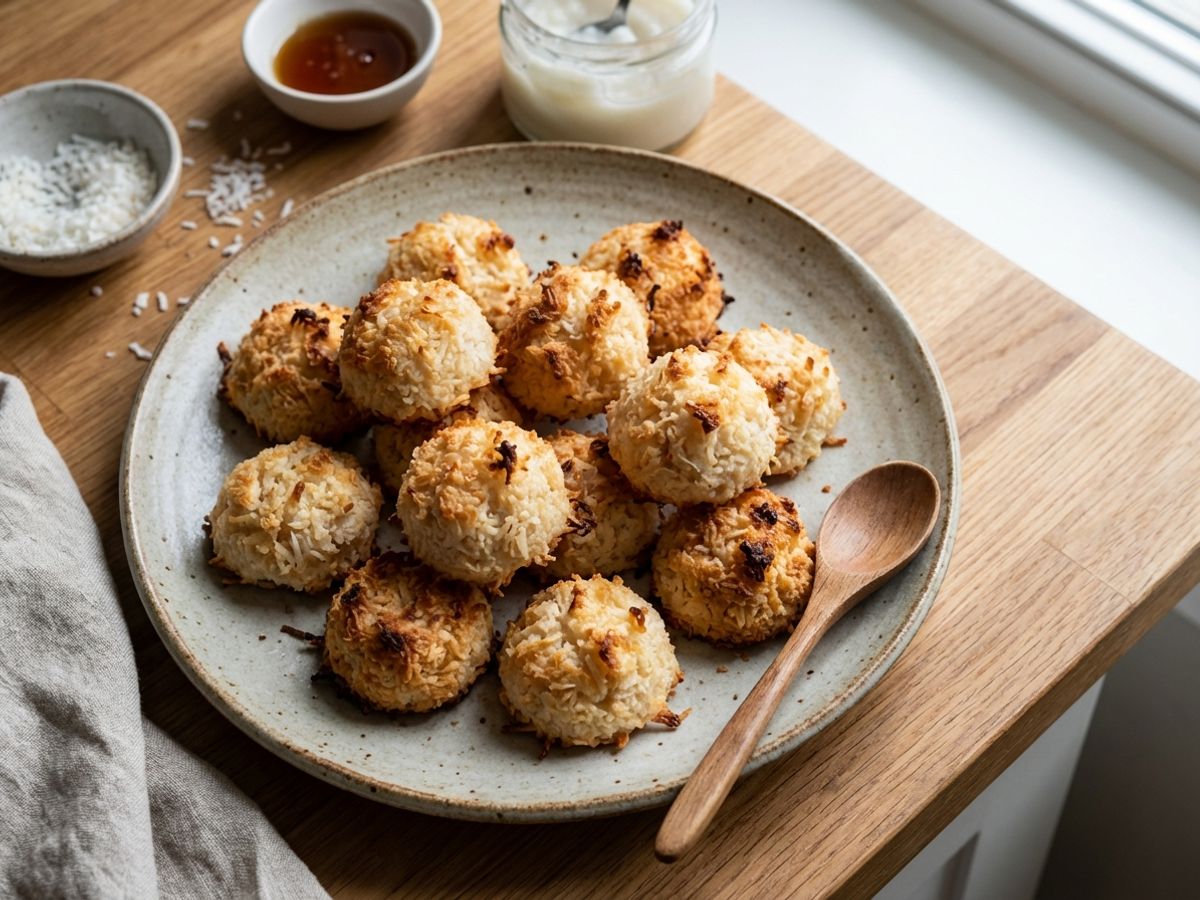
Coconut Macaroons

Crispy on the outside, chewy on the inside. These simple macaroons use coconut butter and maple syrup instead of eggs.
Ingredients
- 2 cups unsweetened shredded coconut
- 1/4 cup coconut butter, softened
- 1/3 cup maple syrup
- 1/4 teaspoon fine sea salt
- 1/2 teaspoon vanilla powder (optional)
Instructions
Prep
- Preheat oven to 350°F (175°C).
- Line a baking sheet with parchment paper.
- If your coconut butter is solid, soften it by placing the jar in warm water for a few minutes.
Mix
- In a mixing bowl, combine the softened coconut butter and maple syrup. Stir until smooth.
- Add the salt and vanilla powder (if using). Mix well.
- Add the shredded coconut and stir until everything is evenly coated. The mixture should be sticky enough to hold together when pressed.
Shape
- Use a tablespoon or small cookie scoop to portion the mixture.
- Press firmly into mounds and place on the prepared baking sheet, spacing about 1 inch apart.
- Reshape any loose pieces. Pack them tightly so they hold together during baking.
Bake
- Bake for 12-15 minutes, until the edges and bottoms are golden brown.
- The macaroons will feel soft when warm but firm up as they cool.
- Let cool completely on the baking sheet before removing.
Tips & Substitutions
- Coconut butter vs coconut oil. Coconut butter (also called coconut manna) includes the coconut flesh and provides better structure. Coconut oil can work but the macaroons may spread more.
- Shredded vs flaked coconut. Use finely shredded coconut for the best texture. Large flakes can make the macaroons fall apart.
- Sweetness level. Adjust maple syrup to taste. Start with 1/4 cup for a less sweet version.
- Too dry? Coconut dryness varies by brand. If the mixture won't hold together, add 1-2 teaspoons more maple syrup.
- Why no vanilla extract? Vanilla extract is alcohol-based, which some people prefer to avoid. Vanilla powder gives the same flavor without the alcohol. You can skip it entirely if needed.
- Why no eggs? Traditional macaroons use egg whites, but egg whites can act as histamine liberators for some people. Coconut butter provides the binding instead.
Why This Works
Coconut. Naturally low in histamine and provides both structure and flavor. Use unsweetened shredded coconut to control the sweetness level.
Coconut butter. Acts as the binder in place of egg whites. It contains the coconut flesh, which helps everything stick together. Look for brands with just one ingredient: coconut.
Maple syrup. A generally well-tolerated sweetener that adds moisture and helps bind the coconut.
No chocolate. Traditional macaroons are often dipped in chocolate, but chocolate is high in histamine. These are delicious on their own.
Freshness matters. Use fresh shredded coconut from a recently opened bag for the best results.
Storage
Store in an airtight container at room temperature for up to 3 days. They'll stay crispiest on day one but remain chewy and delicious after that. Refrigerate for up to 1 week. Freeze for up to 1 month with parchment between layers. If you're very sensitive, freeze extras promptly rather than storing at room temperature.
Not sure if an ingredient is safe? Histamine Tracker includes a database of 1,000+ foods with histamine ratings to help you cook with confidence.


For educational purposes only. Not medical advice. Consult a healthcare professional for personal guidance.
References
- Is Coconut High Histamine? — Low Histamine Eats
- Going Egg Free for Histamine Intolerance — Healing Histamine
- High Histamine Foods List — MastCell360
- Histamine and histamine intolerance — Maintz & Novak (2007)
- Histamine Intolerance: The Current State of the Art — Comas-Basté et al. (2020)
- Biogenic Amines in Plant-Origin Foods: Are They Frequently Underestimated in Low-Histamine Diets? — Sánchez-Pérez et al. (2021)
- Diamine Oxidase Supplementation Improves Symptoms in Patients with Histamine Intolerance — Schnedl et al. (2019)
- Histamine Intolerance — A Comprehensive Review — Jochum (2024)