 Histamine Tracker
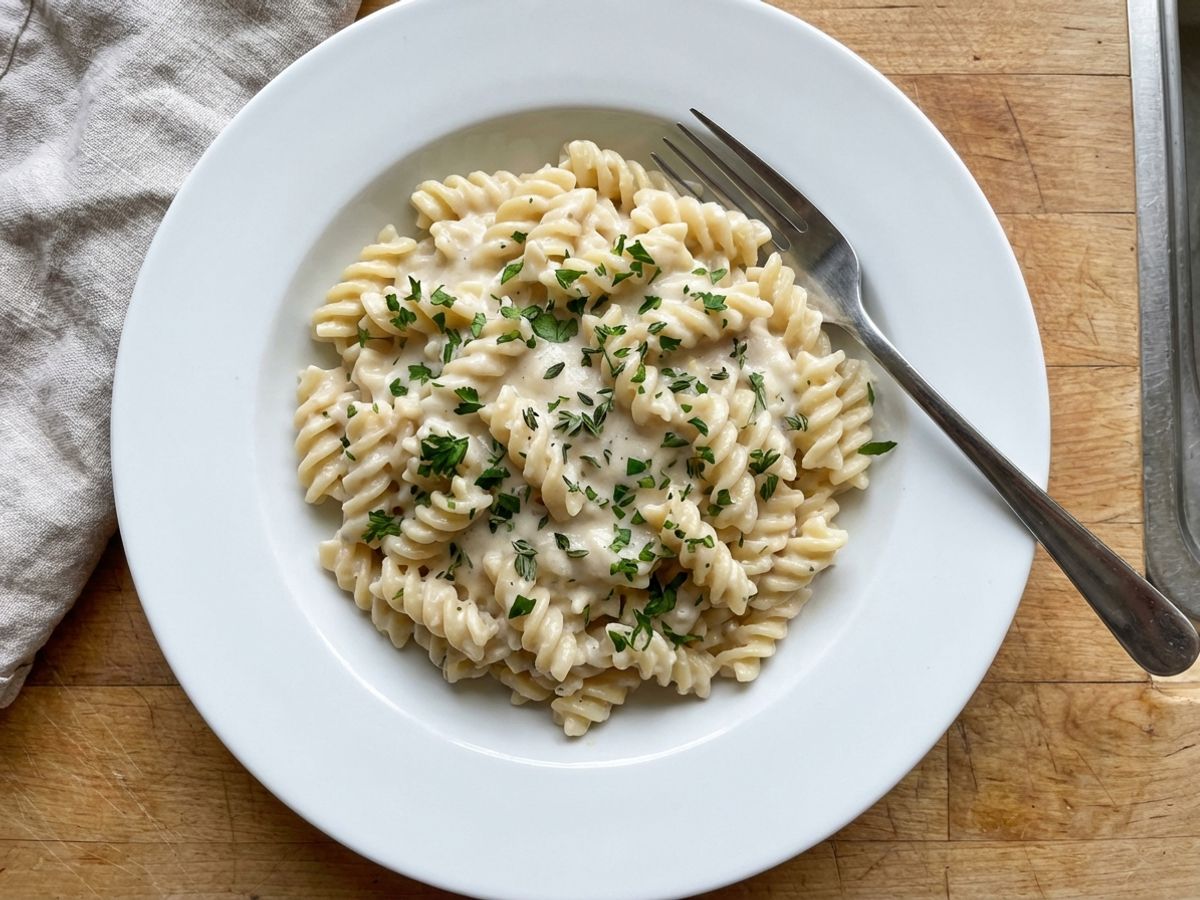
Creamy Garlic Pasta

Gluten-free pasta with creamy coconut sauce.
Ingredients
For the Pasta
- 12 oz gluten-free pasta (rice or quinoa-based)
- Salt for pasta water
For the Sauce
- 1 cup full-fat coconut cream
- 3 tablespoons garlic-infused olive oil (see note)
- 1/4 cup reserved pasta water
- 1/2 teaspoon sea salt
- Pinch of black pepper (optional)
- 2 tablespoons fresh parsley, chopped
- 1 tablespoon fresh thyme leaves (or 1 teaspoon dried)
Instructions
Cook the Pasta
- Bring a large pot of salted water to a boil.
- Cook pasta according to package directions until al dente.
- Reserve 1/2 cup pasta water before draining.
- Drain pasta and set aside.
Make the Sauce
- In the same pot over medium-low heat, add the garlic-infused olive oil.
- Pour in the coconut cream and stir to combine.
- Add salt and pepper if using.
- Add 1/4 cup of the reserved pasta water and stir until smooth.
- Cook for 2-3 minutes until warmed through. Do not boil.
Combine
- Add the drained pasta to the sauce.
- Toss gently to coat all the pasta.
- Add fresh parsley and thyme.
- Toss again to distribute the herbs.
- If sauce seems thick, add more pasta water 1 tablespoon at a time.
- Serve immediately.
Tips & Substitutions
- Make your own garlic-infused oil by heating olive oil with smashed garlic over low heat for 10 minutes. Remove the garlic before using. Use immediately and do not store homemade garlic oil at room temperature. Commercially prepared garlic-infused olive oil is a convenient alternative.
- Skip the garlic entirely if it bothers you. Plain olive oil with extra herbs still makes a flavorful sauce.
- Add steamed broccoli or sauteed zucchini for vegetables. Fresh-cooked chicken works if you want protein.
- Check the coconut cream for additives like guar gum or carrageenan, which bother some people. Look for brands with just coconut and water.
- Rice-based pasta tends to be the most neutral in flavor. Quinoa-based pasta has a slightly nuttier taste.
Why This Works
Gluten-free pasta. Rice and quinoa-based pastas are generally well tolerated and avoid the gluten that many people with histamine intolerance are also sensitive to.
Coconut cream. A dairy-free alternative that is generally well tolerated. It provides the rich, creamy texture that heavy cream would normally add.
Garlic-infused olive oil. Garlic can act as a histamine liberator for some people. Infusing the oil and removing the garlic pieces may reduce this effect while keeping the flavor. Skip it entirely if garlic is a trigger for you.
Fresh parsley and thyme. Fresh herbs are generally well tolerated and add flavor complexity to a simple sauce.
Storage
Best eaten immediately while the sauce is creamy and the pasta is al dente. Pasta dishes thicken and dry out when stored. If you have leftovers, refrigerate within 30 minutes and reheat gently with a splash of water. Histamine can increase in any leftovers over time, though this dish is typically lower risk than protein-heavy leftovers. Very sensitive individuals may still prefer to eat it fresh.
Not sure if an ingredient is safe? Histamine Tracker includes a database of 1,000+ foods with histamine ratings to help you cook with confidence.


For educational purposes only. Not medical advice. Consult a healthcare professional for personal guidance.
References
- Is Coconut Cream High in Histamine — Casa de Sante
- Is Garlic High in Histamine — Casa de Sante
- How to Get Enough Vegetables on a Low Histamine Diet — Happy Without Histamine
- Histamine and histamine intolerance — Maintz & Novak (2007)
- Histamine Intolerance: The Current State of the Art — Comas-Basté et al. (2020)
- Biogenic Amines in Plant-Origin Foods: Are They Frequently Underestimated in Low-Histamine Diets? — Sánchez-Pérez et al. (2021)
- Diamine Oxidase Supplementation Improves Symptoms in Patients with Histamine Intolerance — Schnedl et al. (2019)
- Histamine Intolerance — A Comprehensive Review — Jochum (2024)