 Histamine Tracker
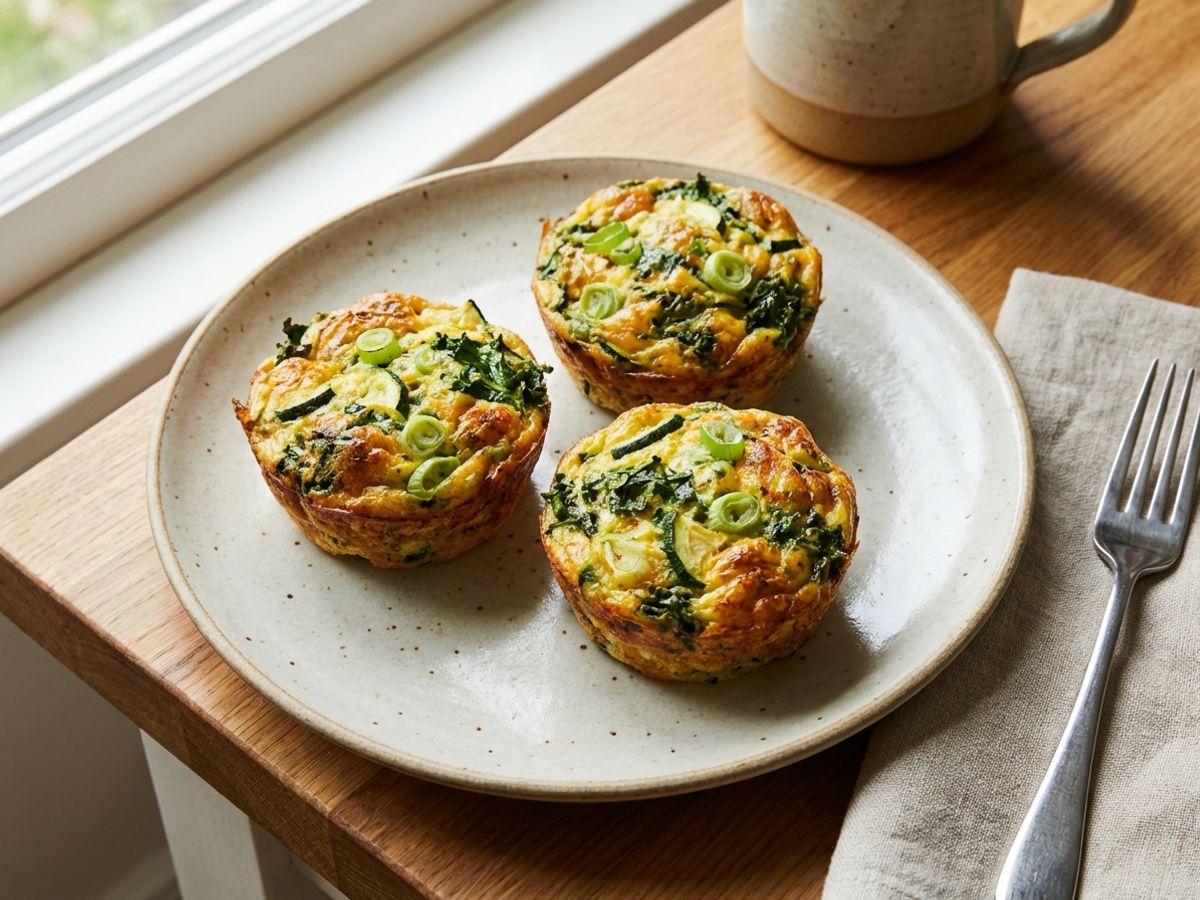
Vegetable Egg Muffins

Baked eggs with vegetables in muffin form.
Ingredients
- 6 large eggs
- 2 tablespoons coconut milk (full-fat, additive-free)
- 1/4 teaspoon sea salt
- 1 tablespoon olive oil or coconut oil
- 1/2 cup zucchini, finely diced
- 1/2 cup kale, stems removed and finely chopped
- 2 tablespoons green onion tops only (green parts), sliced
- 1 teaspoon fresh thyme leaves (or 1/4 teaspoon dried)
- Pinch of black pepper (optional)
Instructions
Prep
- Preheat your oven to 375°F (190°C).
- Grease a 6-cup muffin tin with olive oil or coconut oil, or use silicone muffin liners.
Cook the Vegetables
- Heat the olive oil in a small skillet over medium heat.
- Add the diced zucchini and cook for 2-3 minutes until slightly softened.
- Add the kale and green onion tops. Cook for another 1-2 minutes until the kale is wilted.
- Remove from heat and let cool slightly.
Mix and Bake
- In a bowl, whisk together the eggs, coconut milk, salt, thyme, and pepper if using.
- Divide the cooked vegetables evenly among the 6 muffin cups.
- Pour the egg mixture over the vegetables, filling each cup about 3/4 full.
- Bake for 18-20 minutes until the eggs are set and the tops are lightly golden.
- Let cool in the tin for 5 minutes before removing.
Tips & Substitutions
- Kale works better than spinach here. Spinach is a common trigger for histamine intolerance, so kale or chard are often better tolerated.
- Some people react to egg whites. Use 8 yolks instead of 6 whole eggs if egg whites are a trigger for you.
- For Low-FODMAP, use only the green tops of green onions. The white parts are higher in FODMAPs.
- Silicone muffin liners make removal much easier. If using a metal tin, grease generously with coconut oil.
- Swap zucchini for diced bell pepper (if tolerated) or broccoli. Use whatever low histamine vegetables you have on hand.
Why This Works
Eggs. Eggs themselves contain no histamine, though egg whites can trigger reactions in some people. Yolks alone still provide good nutrition and binding.
Kale. A low histamine green that is commonly well tolerated. It provides nutrients without the concerns of spinach, which is commonly problematic for people with histamine intolerance.
Zucchini. Naturally low in histamine and generally well tolerated. It adds moisture and mild flavor to the muffins.
Fresh thyme. Fresh herbs are generally well tolerated and provide flavor without relying on processed seasoning blends.
Coconut milk. A small amount adds creaminess without dairy. Check labels for additives if you are sensitive.
Storage
For meal prep, freeze promptly after cooling. Reheat from frozen in a 350°F (175°C) oven for 10-15 minutes. Freezing is better than refrigerating since histamine can increase in leftovers over time, especially cooked protein dishes. If refrigerating, store promptly and aim to eat within 24 hours.
Not sure if an ingredient is safe? Histamine Tracker includes a database of 1,000+ foods with histamine ratings to help you cook with confidence.


For educational purposes only. Not medical advice. Consult a healthcare professional for personal guidance.
References
- 3 Types of Tasty Low-Histamine Vegetables to Brighten Up Your Plate — Histamine Doctor
- 7 Easy Low Histamine Food Swaps — Happy Without Histamine
- Are Eggs High in Histamine? — Histamine Doctor
- Histamine and histamine intolerance — Maintz & Novak (2007)
- Histamine Intolerance: The Current State of the Art — Comas-Basté et al. (2020)
- Biogenic Amines in Plant-Origin Foods: Are They Frequently Underestimated in Low-Histamine Diets? — Sánchez-Pérez et al. (2021)
- Diamine Oxidase Supplementation Improves Symptoms in Patients with Histamine Intolerance — Schnedl et al. (2019)
- Histamine Intolerance — A Comprehensive Review — Jochum (2024)