 Histamine Tracker
Eggs, Potatoes, and Greens

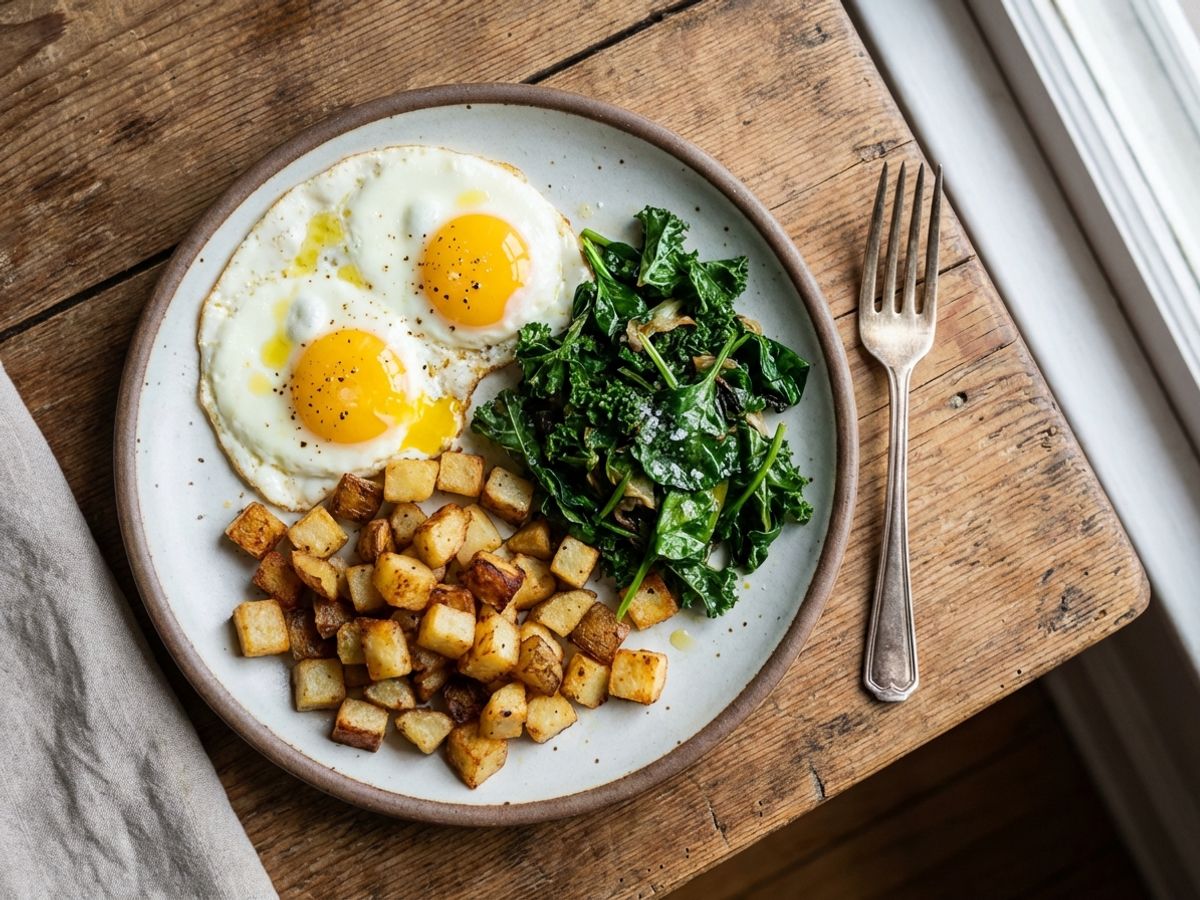
Fried eggs, potatoes, and sauteed greens.
Ingredients
Potatoes
- 2 medium potatoes, diced into 1/2-inch cubes
- 2 tablespoons olive oil
- 1/4 teaspoon sea salt
Greens
- 4 cups fresh greens (kale or chard)
- 1 tablespoon olive oil
- 1 clove garlic, minced (optional)
- Pinch of sea salt
Eggs
- 4 eggs
- 1 tablespoon butter or olive oil
- Sea salt to taste
Instructions
Cook the Potatoes
- Heat olive oil in a large skillet over medium-high heat.
- Add diced potatoes and spread in a single layer.
- Cook for 15-20 minutes, stirring occasionally, until golden and crispy.
- Season with salt. Transfer to plates.
Saute the Greens
- In the same skillet, add olive oil over medium heat.
- Add garlic if using and cook for 30 seconds.
- Add greens and cook for 2-4 minutes until wilted.
- Season with salt. Add to plates.
Fry the Eggs
- Wipe the skillet and add butter or oil over medium heat.
- Crack eggs into the skillet.
- Cook for 2-3 minutes for runny yolks, longer for firmer eggs.
- Season with salt.
Serve
- Place eggs over the potatoes and greens.
- Serve immediately.
Tips & Substitutions
- Skip the garlic if needed. Garlic can act as a histamine liberator for some people. The dish works well without it.
- Swap the potatoes. Sweet potatoes work instead of white potatoes and add a slightly different flavor profile.
- Stick with kale or chard for the greens. Most fresh leafy greens work here, but avoid spinach, which is high in histamine. Kale takes a bit longer to wilt than chard, so adjust cooking time based on what you use.
- Scrambled instead of fried. Scrambled eggs work just as well if you prefer them. Fresh chives or parsley add color and flavor.
- Egg white sensitivity. Some people tolerate egg yolks better than whites. If egg whites bother you, try using fewer whites (1 whole egg plus extra yolks) or test eggs separately to assess your tolerance.
Why This Works
Eggs. Eggs contain no histamine themselves, making them a reliable quick protein. However, egg whites can trigger reactions in some people, so individual tolerance varies.
Potatoes. Naturally low in histamine and one of the most commonly tolerated starches. They provide a filling, safe base for the meal.
Fresh greens. Leafy greens like kale and chard are generally well tolerated and naturally low in histamine.
Garlic (optional). Garlic contains quercetin, a compound sometimes discussed in mast cell research. However, garlic can also act as a histamine liberator for some people. Use it only if you tolerate it well.
Storage
Best eaten fresh right after cooking. Cooked eggs can become more reactive for some people as they sit, so leftovers are best avoided. If you have leftovers, cool quickly, refrigerate within one hour, and eat within 24 hours.
Not sure if an ingredient is safe? Histamine Tracker includes a database of 1,000+ foods with histamine ratings to help you cook with confidence.


For educational purposes only. Not medical advice. Consult a healthcare professional for personal guidance.
References
- 3 Types of Tasty Low-Histamine Vegetables to Brighten Up Your Plate — Histamine Doctor
- Are Onions High Histamine? | Clear Allergy Facts — Snuggy Mom
- Low Histamine Diet: Foods to Avoid and Eat — Wyndly
- Histamine and histamine intolerance — Maintz & Novak (2007)
- Histamine Intolerance: The Current State of the Art — Comas-Basté et al. (2020)
- Biogenic Amines in Plant-Origin Foods: Are They Frequently Underestimated in Low-Histamine Diets? — Sánchez-Pérez et al. (2021)
- Diamine Oxidase Supplementation Improves Symptoms in Patients with Histamine Intolerance — Schnedl et al. (2019)
- Histamine Intolerance — A Comprehensive Review — Jochum (2024)