 Histamine Tracker
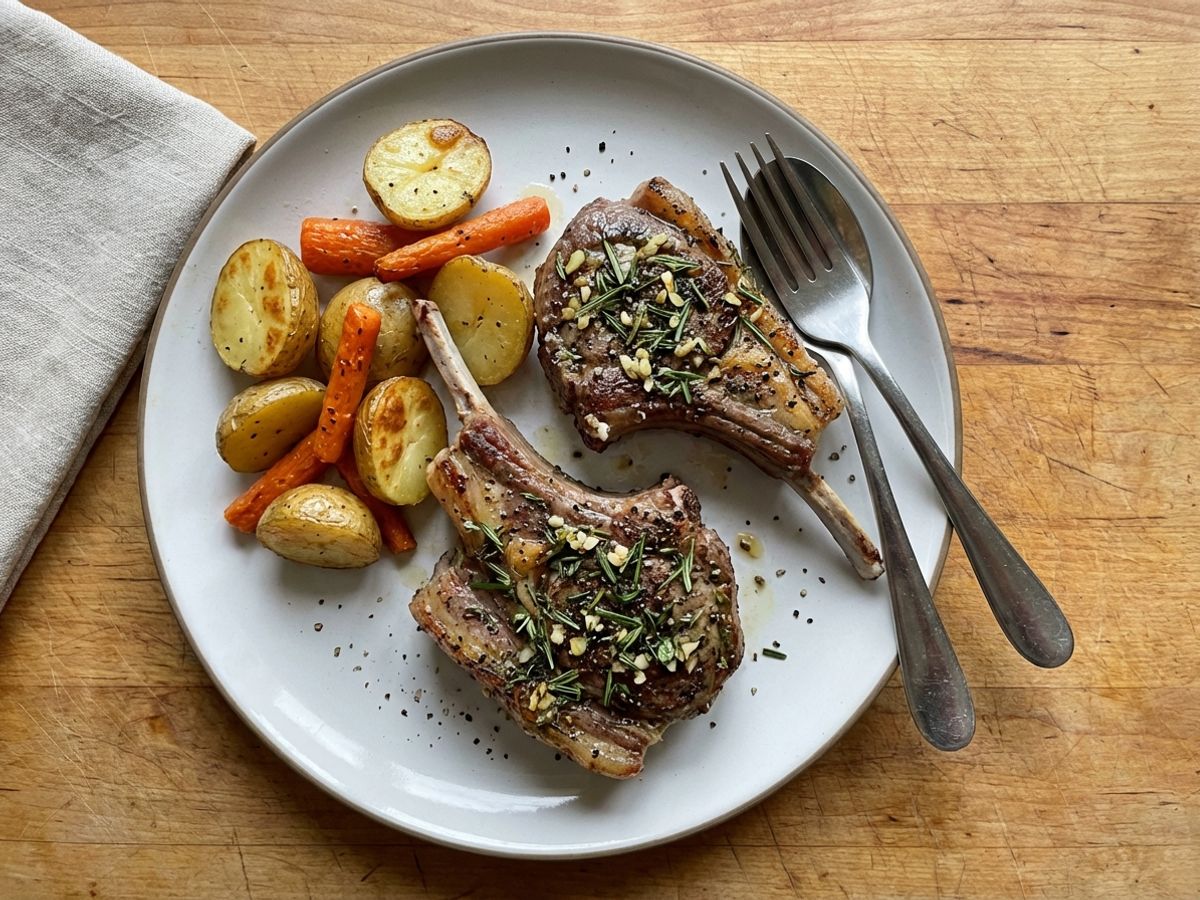
Herb-Crusted Lamb Chops

Pan-seared lamb chops with rosemary and thyme.
Ingredients
Lamb Chops
- 8 lamb rib chops (about 2 pounds)
- 2 tablespoons olive oil
- 2 tablespoons fresh rosemary, finely chopped
- 1 tablespoon fresh thyme leaves
- 3 cloves garlic, minced
- 1/2 teaspoon sea salt
- 1/4 teaspoon black pepper (optional)
Roasted Vegetables
- 1 pound baby potatoes, halved
- 2 medium carrots, cut into 1-inch pieces
- 2 tablespoons olive oil
- 1/2 teaspoon sea salt
Instructions
Roast the Vegetables
- Preheat your oven to 425°F (218°C).
- Toss the potatoes and carrots with 2 tablespoons olive oil and salt.
- Spread on a baking sheet in a single layer.
- Roast for 25-30 minutes, stirring halfway through, until golden and tender.
Prepare the Lamb
- Pat the lamb chops dry with paper towels.
- In a small bowl, mix together 2 tablespoons olive oil, rosemary, thyme, garlic, salt, and pepper if using.
- Rub the herb mixture over both sides of the lamb chops.
Sear and Finish
- Heat an oven-safe skillet over medium-high heat.
- When hot, add the lamb chops and sear for 3 minutes per side until browned.
- Transfer the skillet to the oven and roast for 4-6 minutes for medium-rare (130-135°F / 54-57°C) or 7-9 minutes for medium (140-145°F / 60-63°C). The USDA minimum for lamb is 145°F with a 3-minute rest.
- Remove from oven and let rest for 5 minutes before serving.
Serve
- Divide the roasted vegetables among plates.
- Top with lamb chops.
- Serve immediately.
Tips & Substitutions
- Use fresh lamb. Lamb is typically not aged as long as beef, which can make it a better choice for histamine intolerance.
- Let the chops sit at room temperature for 15-20 minutes before cooking for more even searing. Do not leave out longer than 30 minutes.
- Omit the garlic if it is a trigger and use extra rosemary and thyme instead. Garlic can act as a histamine liberator for some people.
- Sweet potatoes or parsnips work instead of regular potatoes for the roasted vegetables.
- An instant-read thermometer is essential for getting the right doneness. Lamb goes from perfect to overcooked quickly.
Why This Works
Fresh lamb. Generally well tolerated and typically less aged than beef. When bought fresh and cooked immediately, it is a good protein option.
Fresh rosemary and thyme. Fresh herbs are generally well tolerated and add deep flavor without relying on marinades or fermented sauces. If you are sensitive to dried herbs or spices, fresh versions may be easier to tolerate.
Garlic (optional). Contains compounds sometimes discussed in mast cell research, but can also act as a histamine liberator for some people. This is why it is listed as optional. Use it only if you tolerate it well.
Potatoes and carrots. Both are naturally low in histamine and commonly well tolerated. Roasting brings out their natural sweetness.
Olive oil. A well-tolerated fat that helps the herb crust adhere to the lamb and promotes browning.
Storage
Best served immediately while the lamb is at the right temperature and the crust is crisp. Lamb, like all protein, accumulates histamine as it sits. If you have leftovers, refrigerate within 30 minutes and eat within 24 hours. The roasted vegetables store better than the lamb and can be reheated separately.
Not sure if an ingredient is safe? Histamine Tracker includes a database of 1,000+ foods with histamine ratings to help you cook with confidence.


For educational purposes only. Not medical advice. Consult a healthcare professional for personal guidance.
References
- The Best Low Histamine Meat and Seafood Options — MastCell360 (Beth O'Hara)
- Low Histamine Herbs and Spices (and Recipes to Enjoy!) — Through The Fibro Fog
- 30 Anti-Histamine Foods That Fight Inflammation and Stabilize Mast Cells — Alison Vickery
- Histamine and histamine intolerance — Maintz & Novak (2007)
- Histamine Intolerance: The Current State of the Art — Comas-Basté et al. (2020)
- Biogenic Amines in Plant-Origin Foods: Are They Frequently Underestimated in Low-Histamine Diets? — Sánchez-Pérez et al. (2021)
- Diamine Oxidase Supplementation Improves Symptoms in Patients with Histamine Intolerance — Schnedl et al. (2019)
- Histamine Intolerance — A Comprehensive Review — Jochum (2024)