 Histamine Tracker
Cauliflower and Cassava Pizza

Cassava crust pizza with creamy cauliflower sauce.
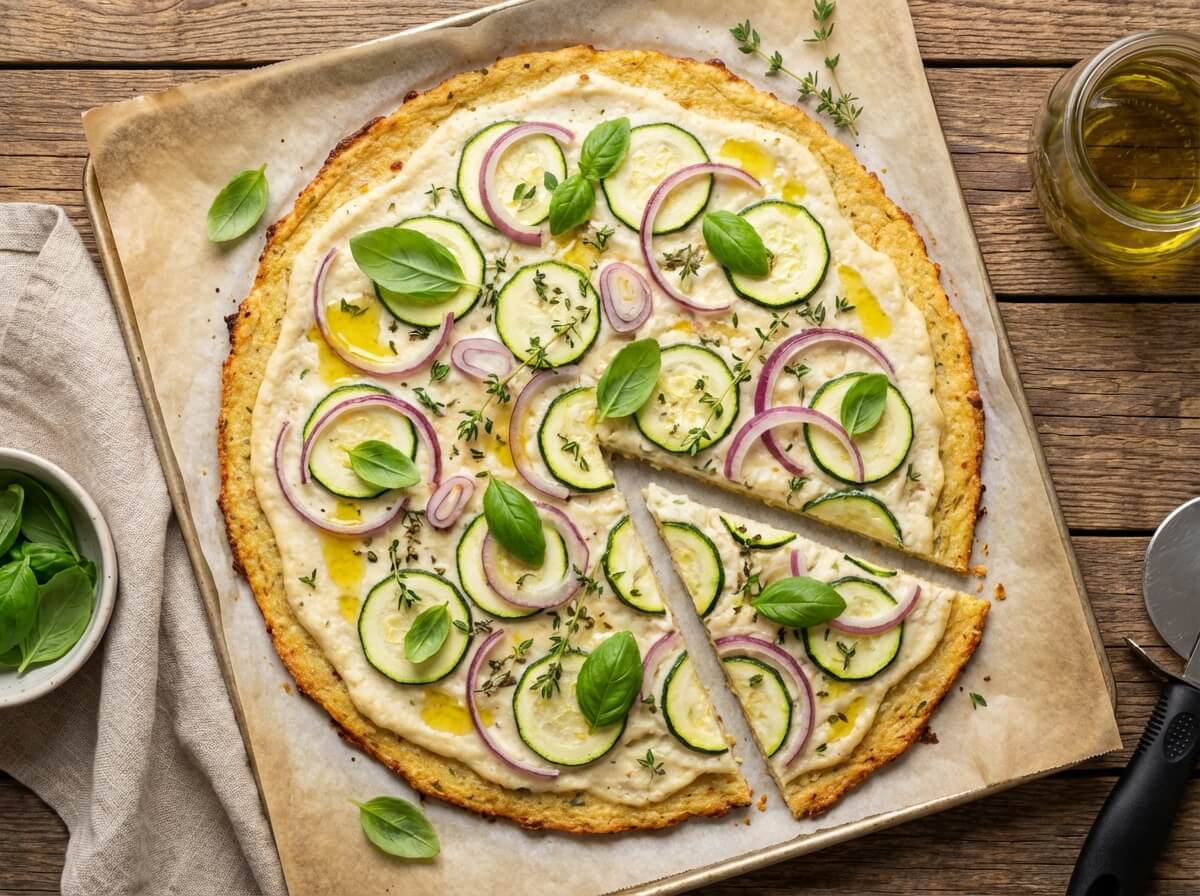
Ingredients
Cassava Crust
- 1 cup cassava flour
- 1/4 cup tapioca starch
- 1/2 teaspoon salt
- 3 tablespoons olive oil
- 1/2 cup warm water (plus more as needed)
Cauliflower Sauce
- 2 cups cauliflower florets
- 2 tablespoons olive oil
- 1 clove garlic, minced
- Salt to taste
Toppings
- 1/2 zucchini, thinly sliced
- 1/4 red onion, thinly sliced
- 1/2 cup fresh basil leaves
- 2 tablespoons olive oil
- Fresh thyme leaves (optional)
Instructions
Cauliflower Sauce
- Boil cauliflower florets in salted water until very soft, about 10 minutes.
- Reserve 1/4 cup of the cooking water, then drain the cauliflower.
- Add cauliflower to a blender with olive oil, garlic, reserved cooking water, and salt.
- Blend until completely smooth and creamy. Add more cooking water if needed to reach a spreadable consistency.
- Set aside.
Cassava Crust
- Preheat oven to 375°F (190°C).
- Mix cassava flour, tapioca starch, and salt in a bowl.
- Add olive oil and warm water, stirring to combine.
- Knead briefly until a smooth dough forms. If too dry or crumbly, add water a tablespoon at a time until the dough holds together.
- Place dough between two sheets of parchment paper.
- Roll out thin, about 1/8 to 1/4 inch thickness, in a round or oval shape. Thinner crusts will be crispier.
- Transfer the bottom parchment with dough to a baking sheet.
- Bake for 12-15 minutes until the edges start to turn golden.
Assemble
- Remove crust from oven.
- Spread cauliflower sauce evenly over the crust, leaving a small border.
- Arrange zucchini and onion slices on top.
- Drizzle with olive oil.
- Return to oven and bake for 12-15 minutes until edges are golden and vegetables are tender.
Serve
Top with fresh basil and thyme. Slice and serve immediately.
Tips & Substitutions
- Cauliflower sauce replaces tomato sauce, which is a common trigger for histamine intolerance. It creates a creamy, mild base that works well with pizza toppings.
- Skip the red onion if it bothers you. Onions can act as histamine liberators for some people. Try extra zucchini or sliced bell pepper instead.
- If you tolerate dairy, try very fresh mozzarella or ricotta, which are often better tolerated than aged cheeses. Choose the freshest available and use promptly.
- Prebake the crust an extra 5 minutes for crispier results. Thinner crusts also crisp up better.
- Arrowroot starch works as a substitute for tapioca starch if needed.
Why This Works
Cauliflower. Naturally low in histamine and generally well tolerated. Blended into a sauce, it provides the creamy base that replaces high-histamine tomato sauce.
Cassava flour. A grain-free, gluten-free flour that is commonly well tolerated. It creates a pliable dough that bakes into a crispy crust.
Zucchini. Low in histamine and mild in flavor. It adds moisture and vegetable content without competing with the other toppings.
Fresh basil. Fresh herbs are generally well tolerated and add bright flavor. Basil is a classic pizza topping that works well here.
Olive oil. A staple fat that is well tolerated by most people with histamine intolerance. It helps bind the crust and adds richness to the toppings.
Storage
Best eaten fresh out of the oven when the crust is crispiest. Leftover pizza can be refrigerated and reheated in a 375°F (190°C) oven for 5-7 minutes, but the crust may soften. Eat within 24 hours, as leftovers accumulate histamine over time, especially with any protein toppings.
Not sure if an ingredient is safe? Histamine Tracker includes a database of 1,000+ foods with histamine ratings to help you cook with confidence.


For educational purposes only. Not medical advice. Consult a healthcare professional for personal guidance.
References
- 3 Types of Tasty Low-Histamine Vegetables to Brighten Up Your Plate — Histamine Doctor
- Can You Eat Tomato Sauce on a Low-Histamine Diet? — Histamine Doctor
- Is Cassava High in Histamine? — Casa de Sante
- Histamine and histamine intolerance — Maintz & Novak (2007)
- Histamine Intolerance: The Current State of the Art — Comas-Basté et al. (2020)
- Biogenic Amines in Plant-Origin Foods: Are They Frequently Underestimated in Low-Histamine Diets? — Sánchez-Pérez et al. (2021)
- Diamine Oxidase Supplementation Improves Symptoms in Patients with Histamine Intolerance — Schnedl et al. (2019)
- Histamine Intolerance — A Comprehensive Review — Jochum (2024)