 Histamine Tracker
Pan-Seared Chicken Breast

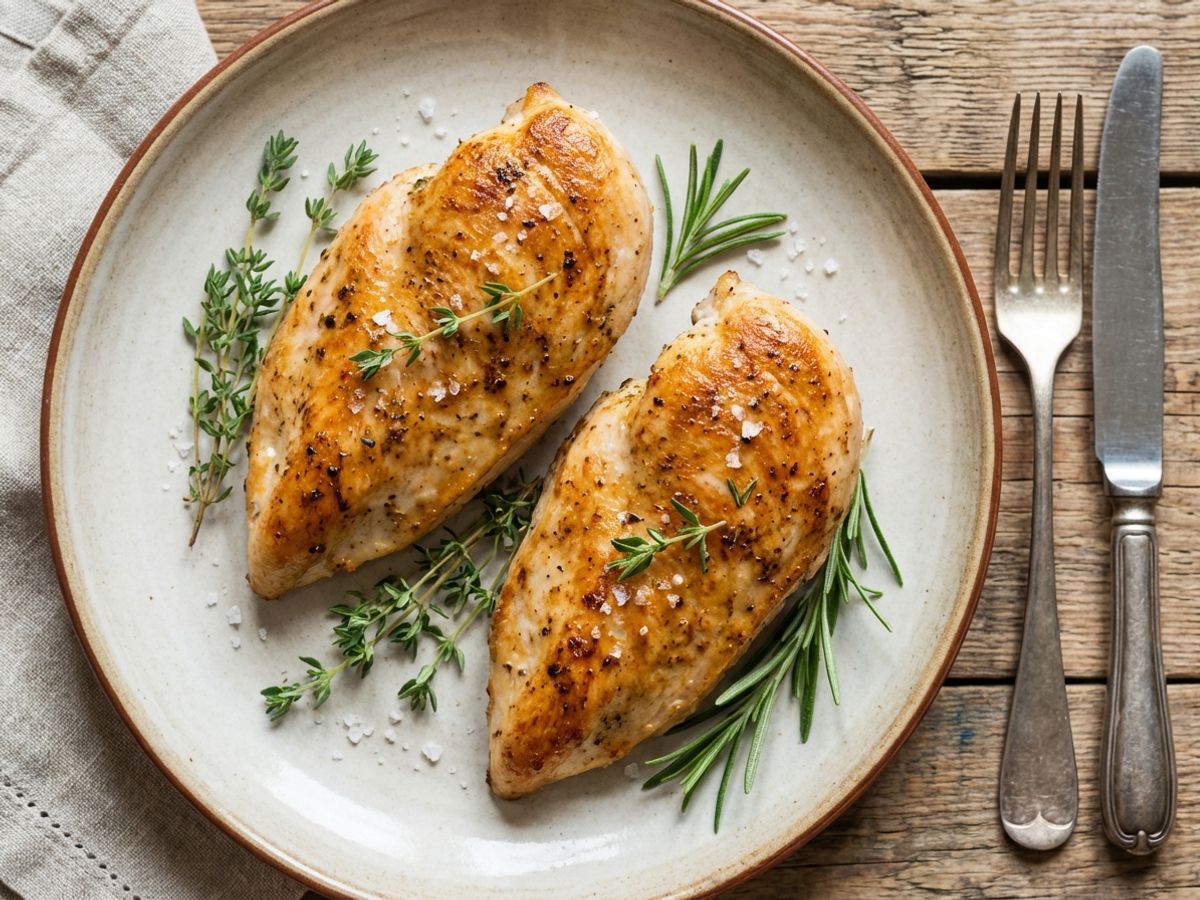
Pan-seared chicken breast with fresh herbs.
Ingredients
- 2 boneless, skinless chicken breasts (about 6-8 oz each)
- 2 tablespoons olive oil
- 1 teaspoon salt
- 2-3 sprigs fresh thyme
- 2-3 sprigs fresh rosemary
Instructions
Prep
- About 20 minutes before cooking, remove chicken from the refrigerator to bring it closer to room temperature. This helps it cook more evenly.
- Place each chicken breast between two sheets of plastic wrap or parchment paper. Using a meat mallet or the bottom of a heavy pan, pound the thicker end until the breast is an even 3/4 inch thickness throughout.
- Pat the chicken completely dry with paper towels on both sides. This is essential for a good sear.
- Season both sides generously with salt. Let sit for 10-15 minutes while the pan heats.
Sear
- Heat a cast iron or stainless steel skillet over medium-high heat for 2-3 minutes until very hot.
- Add the olive oil and swirl to coat the pan. The oil should shimmer but not smoke.
- Place the chicken breasts in the pan, leaving space between them. Do not overcrowd.
- Let the chicken cook undisturbed for 4-5 minutes. Do not move it. A golden-brown crust is forming underneath.
- Flip the chicken when it releases easily from the pan. If it sticks, give it another minute.
- Add the thyme and rosemary sprigs to the pan alongside the chicken.
- Cook for another 4-5 minutes on the second side until the internal temperature reaches 160-163°F (71-73°C).
Rest
- Transfer the chicken to a cutting board and tent loosely with foil.
- Rest for 5 minutes. The temperature will rise to 165°F (74°C) as it rests.
- Slice against the grain and serve with the herb sprigs.
Tips & Substitutions
- No meat thermometer? Press the center of the chicken. It should feel firm but spring back, not hard or squishy.
- If the chicken sticks. Your pan isn't hot enough or the crust hasn't formed yet. Wait another minute before flipping.
- Swap the herbs. Use whatever fresh herbs you have. Basil, oregano, or sage all work well in place of thyme and rosemary.
- Add butter for richness. After flipping, drop a tablespoon of butter into the pan and baste the chicken as it finishes cooking.
- Garlic option. Add 2-3 smashed garlic cloves with the herbs. Note that garlic contains quercetin but can also act as a histamine liberator for some people, so use it only if tolerated.
Why This Works
Fresh chicken. Chicken itself is low in histamine when fresh. Freshness matters most for protein. Cook it the same day you buy it, or freeze and thaw just before cooking.
Olive oil. Generally well tolerated and a safe cooking fat for most people with histamine intolerance. It adds richness without introducing any fermented or aged components.
Fresh herbs. Thyme and rosemary are commonly tolerated and add flavor without relying on spice blends or pre-made seasonings that may contain problematic additives.
Simple seasoning. Just salt, oil, and herbs. No marinades, no soy sauce, no vinegar. Keeping the seasoning minimal reduces the chance of triggering a reaction.
Storage
Best eaten immediately after cooking. Cooked chicken is one of the foods most prone to histamine buildup in leftovers. If you must store it, refrigerate within 30 minutes and eat within 24 hours. Reheating does not reduce histamine that has already formed.
Not sure if an ingredient is safe? Histamine Tracker includes a database of 1,000+ foods with histamine ratings to help you cook with confidence.


For educational purposes only. Not medical advice. Consult a healthcare professional for personal guidance.
References
- Low Histamine Meat Tips and Common Mistakes — Mast Cell 360
- Low Histamine Herbs and Spices (and Recipes to Enjoy!) — Through The Fibro Fog
- Is Olive Oil High Histamine? — Histamine Doctor
- Histamine and histamine intolerance — Maintz & Novak (2007)
- Histamine Intolerance: The Current State of the Art — Comas-Basté et al. (2020)
- Biogenic Amines in Plant-Origin Foods: Are They Frequently Underestimated in Low-Histamine Diets? — Sánchez-Pérez et al. (2021)
- Diamine Oxidase Supplementation Improves Symptoms in Patients with Histamine Intolerance — Schnedl et al. (2019)
- Histamine Intolerance — A Comprehensive Review — Jochum (2024)