 Histamine Tracker
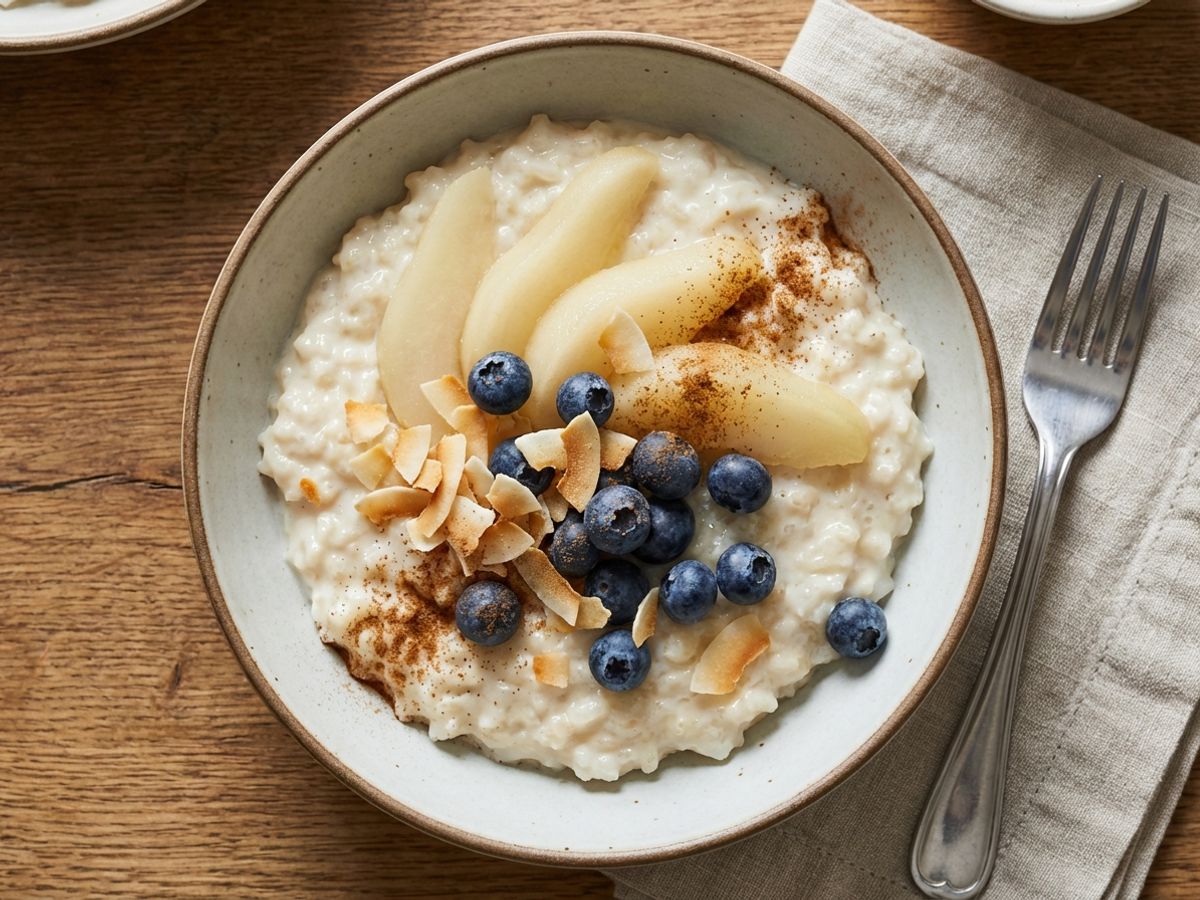
Rice Pudding

A warm, creamy dessert made without dairy or refined sugar.
Ingredients
- 1 cup white rice (jasmine or arborio work well)
- 1 can (13.5 oz) full-fat coconut milk
- 1 1/2 cups water
- 3 tablespoons pure maple syrup
- 1/2 teaspoon vanilla powder (or seeds from 1/2 vanilla bean)
- 1/4 teaspoon sea salt
- 1/2 teaspoon ground cinnamon (optional)
For Serving (optional)
- Peeled pear or cooked apple slices
- Fresh blueberries
- Toasted coconut flakes
- Extra drizzle of maple syrup
Instructions
Cook the Pudding
- Rinse the rice in a fine mesh strainer until the water runs clear.
- Combine the rinsed rice, coconut milk, and water in a medium saucepan.
- Bring to a boil over medium-high heat, stirring occasionally.
- Reduce heat to low and cover with a lid slightly ajar.
- Simmer for 25-40 minutes, stirring every 5 minutes (more frequently in the last 10 minutes to prevent sticking).
- The pudding is ready when the rice is tender and the mixture is creamy and thick.
Season and Serve
- Remove from heat.
- Stir in the maple syrup, vanilla powder, salt, and cinnamon if using.
- Let sit for 5 minutes to thicken slightly.
- Serve warm, or refrigerate and serve chilled.
- Add toppings if desired.
Tips & Substitutions
- Rice varieties. Jasmine rice creates a softer, creamier pudding. Arborio rice gives a thicker, more traditional texture. Regular long-grain white rice works too.
- Skip the cinnamon. Some people with histamine intolerance react to cinnamon. Leave it out if you're sensitive to spices.
- Vanilla options. Vanilla powder or vanilla bean seeds work best. Avoid vanilla extract if you react to alcohol.
- Sweeten to taste. Start with 2 tablespoons maple syrup and add more as desired.
- Thin it out. If the pudding gets too thick, add a splash of coconut milk or water when reheating.
- Check your coconut milk. Choose coconut milk with only coconut and water. Avoid brands with guar gum, carrageenan, or other additives if you're sensitive to thickeners.
Why This Works
White rice. Generally considered low histamine and well tolerated. Rice provides a neutral base that absorbs the creamy coconut milk and sweet maple flavor.
Coconut milk. Creates a rich, creamy pudding without dairy. Full-fat coconut milk gives the best texture and creaminess.
Maple syrup. A simple sweetener with no additives that's often tolerated in small amounts. Provides a warm, vanilla-like sweetness that complements the rice pudding.
No eggs. Some rice pudding recipes use egg for richness, but egg whites can be a trigger for some people with histamine intolerance. This version keeps it simple with just rice and coconut milk.
Storage
Rice pudding is best eaten fresh or within a few hours of making. If storing, cool quickly by portioning into shallow containers and refrigerate promptly. Consume within 24 hours for best histamine tolerance. The pudding will thicken when chilled. Add a splash of coconut milk when reheating to restore creaminess.
For longer storage, freeze portions in individual containers within 1-2 hours of cooking. Thaw in the refrigerator and reheat gently.
Not sure if an ingredient is safe? Histamine Tracker includes a database of 1,000+ foods with histamine ratings to help you cook with confidence.


For educational purposes only. Not medical advice. Consult a healthcare professional for personal guidance.
References
- Low Histamine Foods List — MastCell360
- Is Coconut High Histamine? — Low Histamine Eats
- Going Egg Free for Histamine Intolerance — Healing Histamine
- Histamine and histamine intolerance — Maintz & Novak (2007)
- Histamine Intolerance: The Current State of the Art — Comas-Basté et al. (2020)
- Biogenic Amines in Plant-Origin Foods: Are They Frequently Underestimated in Low-Histamine Diets? — Sánchez-Pérez et al. (2021)
- Diamine Oxidase Supplementation Improves Symptoms in Patients with Histamine Intolerance — Schnedl et al. (2019)
- Histamine Intolerance — A Comprehensive Review — Jochum (2024)