 Histamine Tracker
Roasted Parsnips

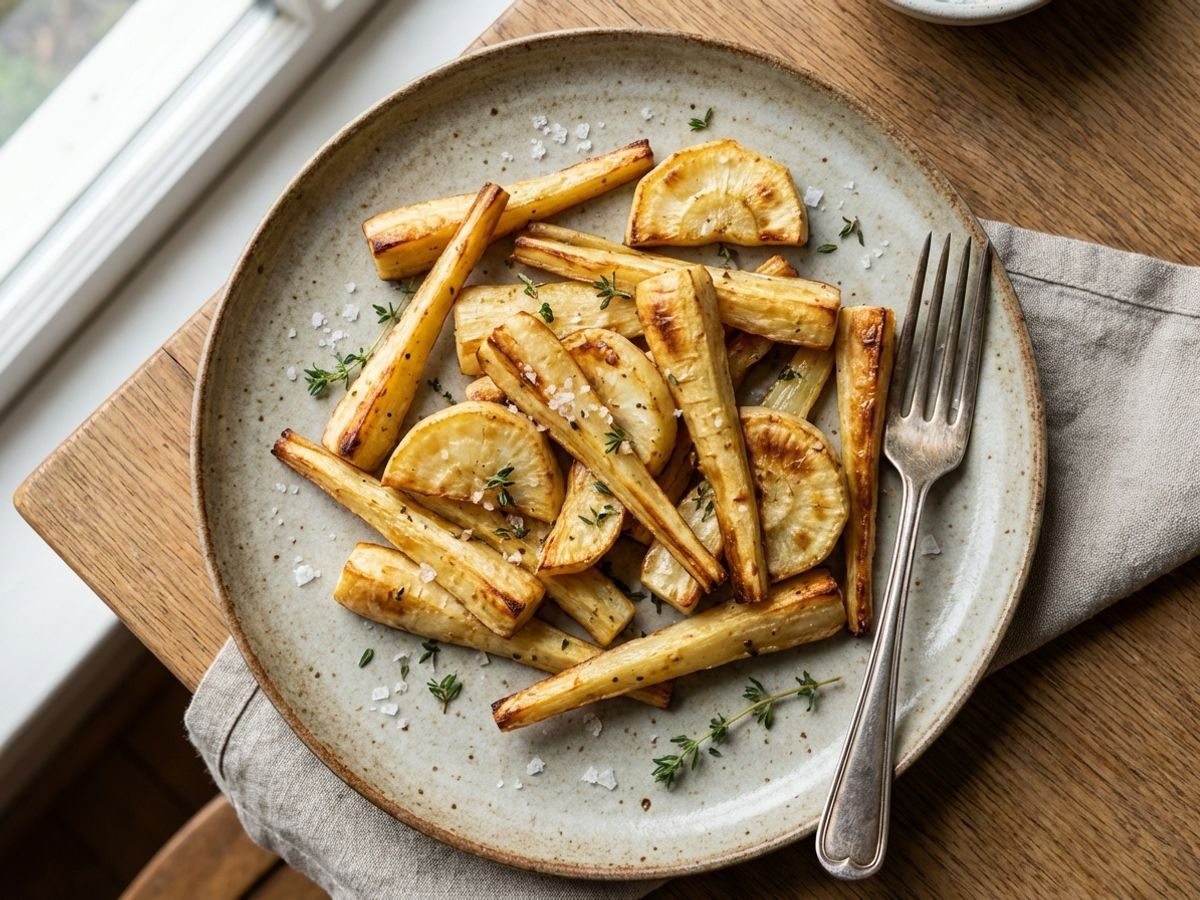
Roasted parsnips with olive oil.
Ingredients
- 1 pound parsnips (about 4-5 medium)
- 2 tablespoons olive oil
- 1/4 teaspoon sea salt
- Fresh thyme (optional)
Instructions
- Preheat oven to 400°F (200°C).
- Peel parsnips and cut into sticks or half-moons of similar size.
- Toss with olive oil and salt.
- Spread in a single layer on a baking sheet.
- Roast for 25-30 minutes, flipping halfway, until golden and tender.
- Garnish with fresh thyme if using. Serve immediately.
Tips & Substitutions
- Cut pieces to similar size for even cooking. If large parsnips have a woody core, cut it out.
- Parsnips and carrots roast well together at the same temperature, so feel free to mix them on one pan.
- A light drizzle of maple syrup before serving enhances the natural sweetness.
- Butter instead of olive oil works well if you tolerate dairy. It complements the sweetness of parsnips nicely.
- Turnips or sweet potatoes can be roasted the same way if parsnips are hard to find.
Why This Works
Parsnips. Naturally low in histamine and generally well tolerated. They have a mild, sweet flavor that intensifies with roasting, so you don't need sauces or heavy seasonings.
Olive oil. A fresh, unfermented fat commonly used in low histamine cooking. It helps with caramelization and adds richness.
Fresh thyme. Fresh herbs are generally well tolerated and add flavor without the concentrated compounds found in some dried spice blends. Individual tolerance may vary.
Freshness. Buying fresh parsnips and roasting them yourself is always better than using pre-made or reheated versions. Freshness matters more than food lists when managing histamine intolerance.
Storage
Best served fresh from the oven. Leftovers can be refrigerated in an airtight container and eaten within 24 hours. Since this is a vegetable dish, histamine buildup is less of a concern than with protein dishes, but freshness is still ideal.
Not sure if an ingredient is safe? Histamine Tracker includes a database of 1,000+ foods with histamine ratings to help you cook with confidence.


For educational purposes only. Not medical advice. Consult a healthcare professional for personal guidance.
References
- 8 Low Histamine Root Vegetables: Safe Choices for Your Diet — Histamine Doctor
- 19 Low Histamine Spices & Herbs (and How To Use Them) — Low Histamine Eats
- Are Leftover Vegetables High in Histamine? — Histamine Doctor
- Histamine and histamine intolerance — Maintz & Novak (2007)
- Histamine Intolerance: The Current State of the Art — Comas-Basté et al. (2020)
- Biogenic Amines in Plant-Origin Foods: Are They Frequently Underestimated in Low-Histamine Diets? — Sánchez-Pérez et al. (2021)
- Diamine Oxidase Supplementation Improves Symptoms in Patients with Histamine Intolerance — Schnedl et al. (2019)
- Histamine Intolerance — A Comprehensive Review — Jochum (2024)