 Histamine Tracker
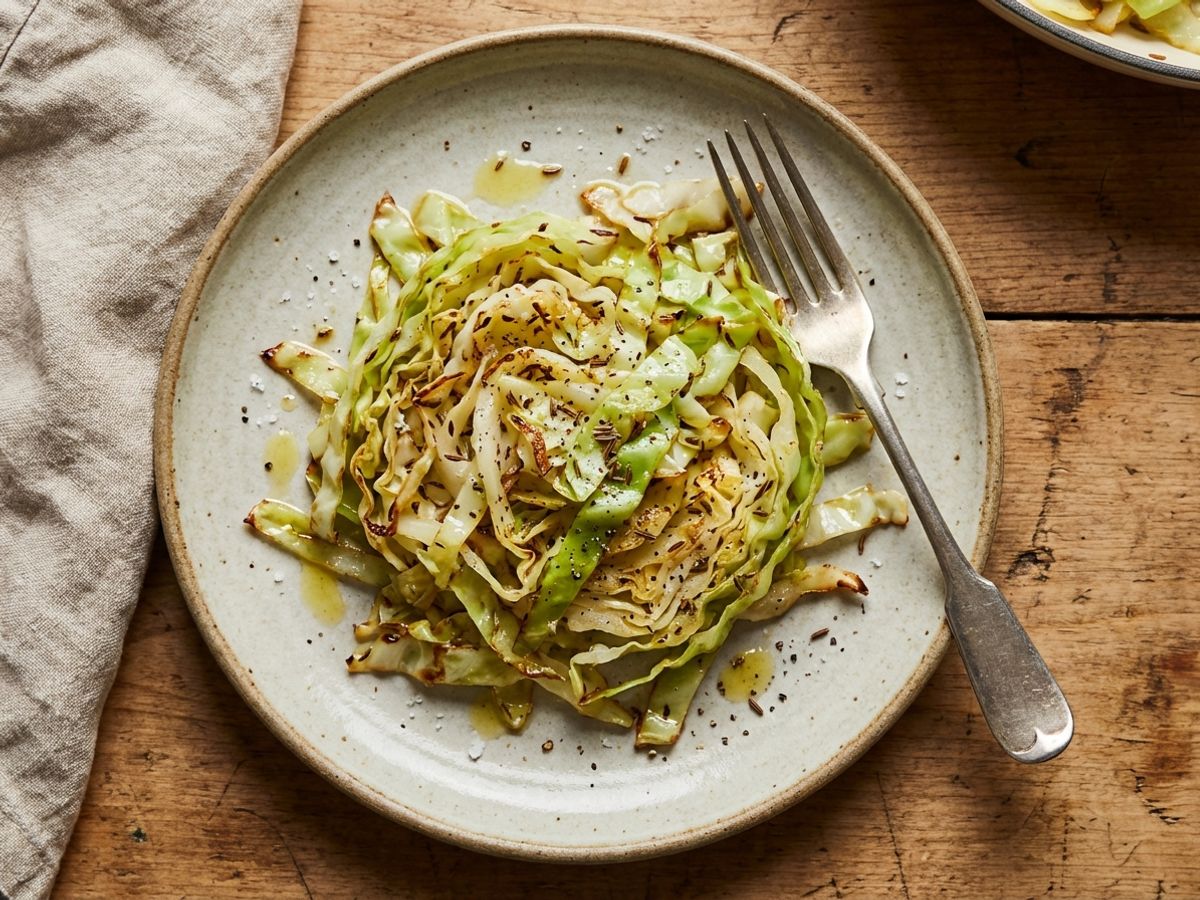
Sauteed Cabbage

Sauteed cabbage with olive oil.
Ingredients
- 1/2 head green cabbage, cored and thinly sliced
- 2 tablespoons olive oil
- 1/2 teaspoon caraway seeds (optional)
- 1/4 teaspoon sea salt
- Black pepper (optional)
Instructions
- Heat olive oil in a large skillet over medium heat.
- Add caraway seeds if using and toast for 30 seconds until fragrant.
- Add the sliced cabbage and toss to coat with oil.
- Cook for 10-12 minutes, stirring occasionally, until cabbage is tender and edges are lightly browned.
- Season with salt and pepper if using.
- Serve immediately.
Tips & Substitutions
- Slice thin for even cooking and better browning. Thick pieces will take longer and won't caramelize as well.
- Red cabbage works too but takes a bit longer to cook and has a slightly different flavor.
- Caraway seeds are optional. Skip them if they bother you. They add a subtle earthy flavor that complements cabbage.
- Butter instead of olive oil gives a richer flavor if you tolerate dairy.
- Add a splash of water if the cabbage starts to stick before it softens. This helps it steam and release without burning.
Why This Works
Cabbage. Naturally low in histamine and generally well tolerated. It's a versatile cruciferous vegetable that cooks down to a tender, mild side dish.
Olive oil. A fresh, unfermented fat commonly used in low histamine cooking. It provides a clean base for sauteing without histamine concerns.
Caraway seeds. Generally well tolerated by most people, though individual tolerance may vary. They add flavor without relying on sauces or seasonings that could be problematic.
Freshness. Using a fresh head of cabbage and cooking it right away is ideal. Freshness matters more than food lists when managing histamine intolerance.
Storage
Best served immediately while still warm and slightly caramelized. Leftovers can be refrigerated in an airtight container and eaten within 24 hours. Reheated cabbage will be softer but still tasty.
Not sure if an ingredient is safe? Histamine Tracker includes a database of 1,000+ foods with histamine ratings to help you cook with confidence.


For educational purposes only. Not medical advice. Consult a healthcare professional for personal guidance.
References
- 3 Types of Tasty Low-Histamine Vegetables to Brighten Up Your Plate — Histamine Doctor
- 43+ Low Histamine Vegetables to Add to Your Diet — Low Histamine Eats
- Are Leftover Vegetables High in Histamine? — Histamine Doctor
- Histamine and histamine intolerance — Maintz & Novak (2007)
- Histamine Intolerance: The Current State of the Art — Comas-Basté et al. (2020)
- Biogenic Amines in Plant-Origin Foods: Are They Frequently Underestimated in Low-Histamine Diets? — Sánchez-Pérez et al. (2021)
- Diamine Oxidase Supplementation Improves Symptoms in Patients with Histamine Intolerance — Schnedl et al. (2019)
- Histamine Intolerance — A Comprehensive Review — Jochum (2024)