 Histamine Tracker
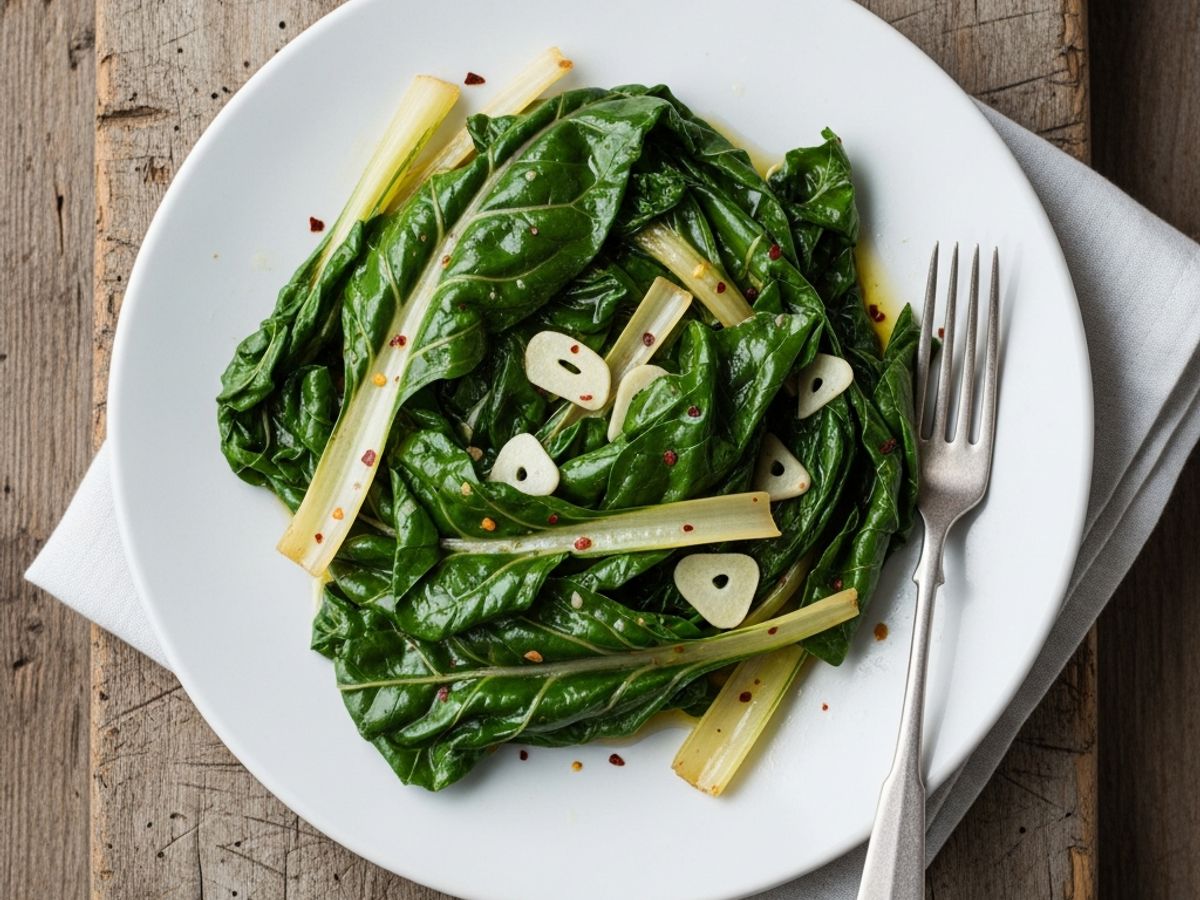
Sauteed Swiss Chard

Sauteed Swiss chard with garlic and olive oil.
Ingredients
- 1 large bunch Swiss chard (about 12 ounces)
- 2 tablespoons olive oil
- 2 cloves garlic, sliced thin (optional)
- 1/4 teaspoon sea salt
- Pinch of red pepper flakes (optional)
Instructions
Prepare the Chard
- Wash the chard thoroughly and shake off excess water.
- Cut the stems from the leaves. Chop stems into 1/2-inch pieces.
- Roughly chop the leaves.
Cook
- Heat olive oil in a large skillet over medium heat.
- Add the chard stems and cook for 2-3 minutes until slightly softened.
- Add garlic if using and cook for 30 seconds until fragrant.
- Add the chard leaves in batches, tossing as they wilt.
- Cook for 3-4 minutes until leaves are tender.
- Season with salt and red pepper flakes if using.
- Serve immediately.
Tips & Substitutions
- Use the stems. They're edible and add nice texture. Cook them first since they take longer than the leaves.
- Skip the garlic if it bothers you. The chard has plenty of flavor with just olive oil and salt.
- Rainbow chard adds visual appeal if you can find it. It cooks the same way as green or red varieties.
- Kale or collard greens can be prepared the same way if Swiss chard isn't available.
- Butter instead of olive oil gives a richer flavor if you tolerate dairy.
Why This Works
Swiss chard. Naturally low in histamine and generally well tolerated. Spinach is a common trigger for many people with histamine intolerance, while Swiss chard is often better tolerated as a leafy green alternative.
Olive oil. A fresh, unfermented fat commonly used in low histamine cooking. It provides a clean base for sauteing without histamine concerns.
Garlic (optional). Garlic adds flavor but can be irritating for some people with histamine intolerance. It is listed as optional because individual tolerance varies. If you are unsure, skip it or try a small amount first.
Freshness. Using fresh Swiss chard and cooking it right away is ideal. Leafy greens can degrade quickly, so freshness matters more than food lists when managing histamine intolerance.
Storage
Best served immediately while still vibrant and tender. Leftovers can be refrigerated in an airtight container and eaten within 24 hours, though the texture will soften considerably. Reheat gently in a skillet with a splash of water.
Not sure if an ingredient is safe? Histamine Tracker includes a database of 1,000+ foods with histamine ratings to help you cook with confidence.


For educational purposes only. Not medical advice. Consult a healthcare professional for personal guidance.
References
- 3 Types of Tasty Low-Histamine Vegetables to Brighten Up Your Plate — Histamine Doctor
- Is Garlic High in Histamine? — Histamine Doctor
- 43+ Low Histamine Vegetables to Add to Your Diet — Low Histamine Eats
- Histamine and histamine intolerance — Maintz & Novak (2007)
- Histamine Intolerance: The Current State of the Art — Comas-Basté et al. (2020)
- Biogenic Amines in Plant-Origin Foods: Are They Frequently Underestimated in Low-Histamine Diets? — Sánchez-Pérez et al. (2021)
- Diamine Oxidase Supplementation Improves Symptoms in Patients with Histamine Intolerance — Schnedl et al. (2019)
- Histamine Intolerance — A Comprehensive Review — Jochum (2024)