 Histamine Tracker
Scrambled Eggs

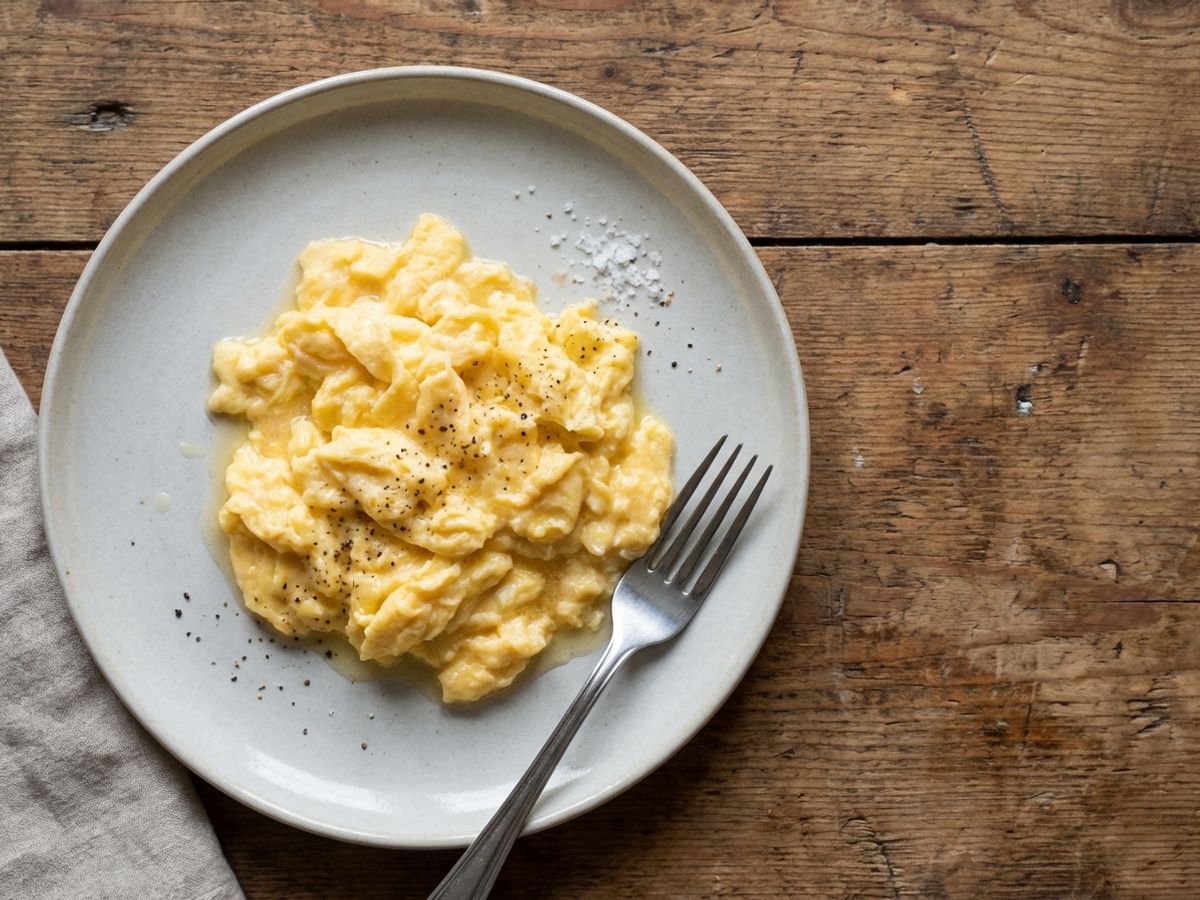
Scrambled eggs with butter and salt.
Ingredients
- 2-3 large eggs
- 1 tablespoon butter
- Pinch of sea salt
- Black pepper (optional)
Instructions
- Crack the eggs into a bowl and whisk until the yolks and whites are fully combined.
- Heat butter in a nonstick skillet over medium-low heat until melted and foamy.
- Pour in the eggs and let sit for 20-30 seconds until the edges begin to set.
- Using a spatula, gently push the eggs from the edges toward the center, tilting the pan to let the uncooked egg flow to the edges.
- Continue folding and pushing gently until the eggs are just set but still look slightly wet. This takes 2-3 minutes.
- Remove from heat immediately. The eggs will continue cooking from residual heat.
- Season with salt and pepper if using. Serve immediately.
Tips & Substitutions
- Low heat is key. Cook over medium-low and remove from heat while the eggs still look slightly wet. They finish cooking on the plate.
- Use olive oil for dairy-free. Swap butter for olive oil or try ghee if you tolerate it. Both work well.
- Fresh herbs at the end are nice. Chives or parsley are usually well tolerated and add flavor.
- For cheese, stick to fresh varieties if tolerated. Fresh mozzarella is often a better choice than aged varieties, which are higher in histamine. Cream cheese is cultured and can be triggering for some, so test carefully.
- A nonstick pan makes cleanup easy. If you don't have one, use a well-seasoned cast iron skillet with a bit more butter to prevent sticking.
Why This Works
Eggs. Eggs contain no histamine themselves, making them a reliable protein source. However, egg whites can trigger reactions in some people, so individual tolerance varies. If you react to whole eggs, try yolks only.
Butter. Fresh butter is generally better tolerated than aged dairy products like hard cheeses. It adds richness without the histamine load of fermented dairy.
Freshness matters. Eggs are best used fresh and cooked to order. This keeps the histamine burden as low as possible.
Storage
Best eaten immediately. Scrambled eggs do not reheat well, and protein dishes accumulate histamine over time in the fridge. Cook only what you plan to eat in one sitting. For more on why, see our guide on why leftovers can trigger symptoms.
Not sure if an ingredient is safe? Histamine Tracker includes a database of 1,000+ foods with histamine ratings to help you cook with confidence.


For educational purposes only. Not medical advice. Consult a healthcare professional for personal guidance.
References
- Are Eggs High in Histamine? — Histamine Doctor
- Are eggs off-limits if you suffer from histamine intolerance? — Baliza
- Are There Low-Histamine Dairy Foods? — Histamine Doctor
- Histamine and histamine intolerance — Maintz & Novak (2007)
- Histamine Intolerance: The Current State of the Art — Comas-Basté et al. (2020)
- Biogenic Amines in Plant-Origin Foods: Are They Frequently Underestimated in Low-Histamine Diets? — Sánchez-Pérez et al. (2021)
- Diamine Oxidase Supplementation Improves Symptoms in Patients with Histamine Intolerance — Schnedl et al. (2019)
- Histamine Intolerance — A Comprehensive Review — Jochum (2024)