 Histamine Tracker
Seared Duck Breast

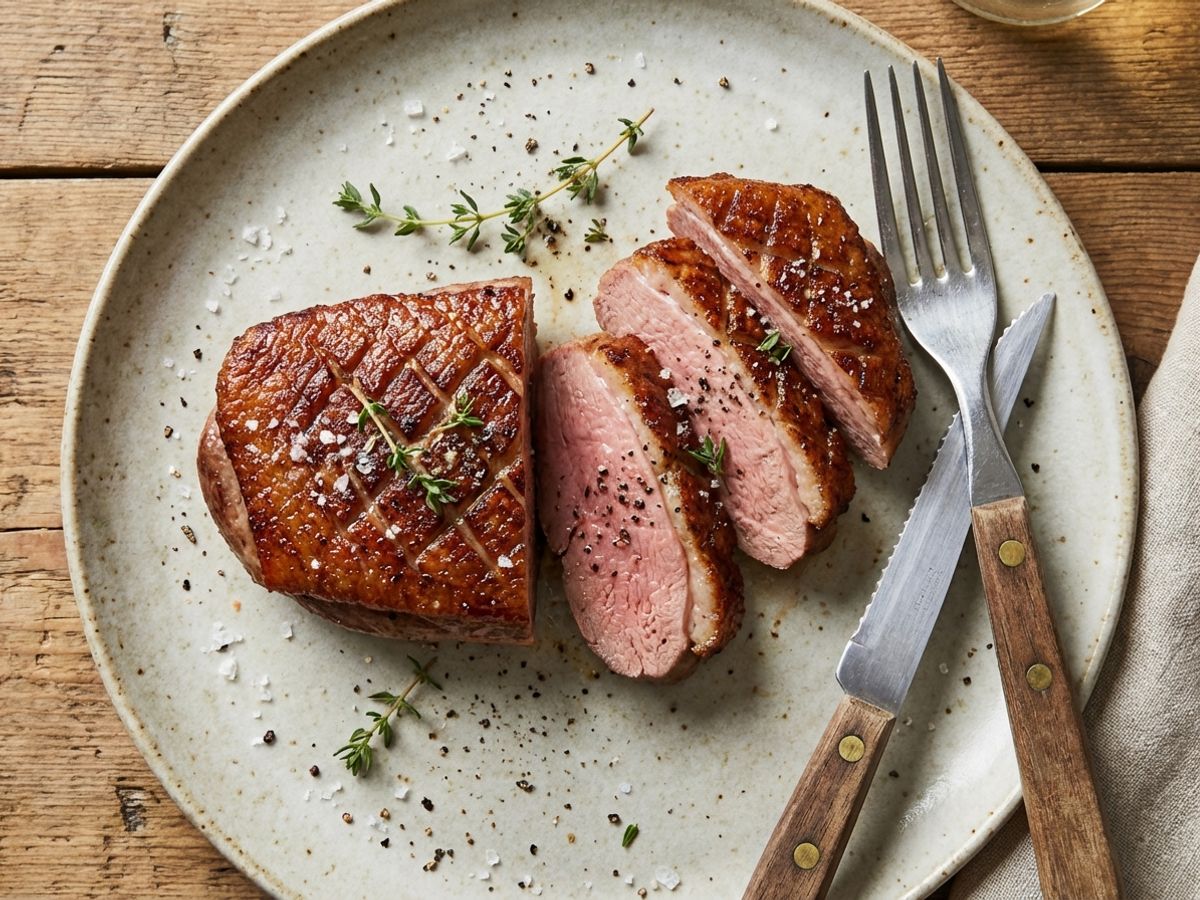
Pan-seared duck breast with crispy skin.
Ingredients
- 2 duck breasts (about 6-8 ounces each)
- 1/2 teaspoon sea salt
- Black pepper (optional)
- Fresh thyme for garnish (optional)
Instructions
Prepare the Duck
- Remove duck from refrigerator 10-15 minutes before cooking. Keep it covered and don't leave it out longer.
- Score the skin in a crosshatch pattern, cutting through the fat but not into the meat.
- Pat dry with paper towels.
- Season both sides generously with salt and pepper if using.
Cook
- Place duck breasts skin-side down in a cold skillet. No oil needed.
- Turn heat to medium-low.
- Cook for 8-15 minutes, rendering the fat as the skin crisps. Do not move the breasts. Time varies by size.
- Pour off rendered fat periodically (save for cooking).
- Flip and cook for 4-6 minutes for medium-rare (135°F/57°C internal temperature).
Rest and Serve
- Transfer to a cutting board and rest for 5 minutes.
- Slice against the grain and serve immediately.
- Garnish with fresh thyme if desired.
Tips & Substitutions
- Start in a cold pan. Placing duck skin-side down in a cold skillet lets the fat render slowly without burning the skin.
- Score the skin deeply. Cut through the fat layer in a crosshatch pattern but stop before hitting the meat. This helps the fat escape and the skin crisp evenly.
- Save the rendered duck fat. It is excellent for roasting vegetables or potatoes. Store in a glass jar in the fridge.
- Temperature guide. 135°F (57°C) for medium-rare, 145°F (63°C) for medium. Duck is poultry, so for maximum safety cook to 165°F (74°C).
- Chicken breast as a swap. If duck is hard to find fresh, a bone-in chicken breast seared skin-side down works with the same technique, though cook times will differ.
Why This Works
Fresh duck. When purchased fresh from a quality source the same day, duck breast can be well tolerated. Many duck breasts are vacuum-packed and aged for days, so ask about freshness when buying. If truly fresh duck is hard to find, frozen-at-peak duck thawed in the fridge and cooked the same day is a good option. Freshness is the most important factor with any meat on a low histamine diet.
Minimal seasoning. Just salt and optional pepper keep this recipe simple and reduce the chance of introducing trigger ingredients.
Fresh thyme. Generally well tolerated and adds subtle flavor. Fresh herbs are preferable to dried, which can vary in tolerance depending on age and storage.
Quick cooking method. Searing and serving immediately minimizes the time the protein sits at room temperature, which helps keep histamine levels low.
Storage
Duck breast is best eaten immediately after cooking. As a protein-rich dish, leftovers accumulate histamine over time. If you must store it, slice and cool rapidly in a shallow container, then refrigerate within 30 minutes. Eat the same day or freeze right away for best tolerance. Reheat gently once at most.
Not sure if an ingredient is safe? Histamine Tracker includes a database of 1,000+ foods with histamine ratings to help you cook with confidence.


For educational purposes only. Not medical advice. Consult a healthcare professional for personal guidance.
References
- Is Duck High in Histamine? — Casa de Sante
- Meat and Seafood Handling Tips for the Low Histamine Diet — Hive Mind Medicine
- Guide to Low-Histamine Cooking and Food Preparation — Creative in My Kitchen
- Histamine and histamine intolerance — Maintz & Novak (2007)
- Histamine Intolerance: The Current State of the Art — Comas-Basté et al. (2020)
- Biogenic Amines in Plant-Origin Foods: Are They Frequently Underestimated in Low-Histamine Diets? — Sánchez-Pérez et al. (2021)
- Diamine Oxidase Supplementation Improves Symptoms in Patients with Histamine Intolerance — Schnedl et al. (2019)
- Histamine Intolerance — A Comprehensive Review — Jochum (2024)