 Histamine Tracker
Sheet Pan Chicken & Vegetables

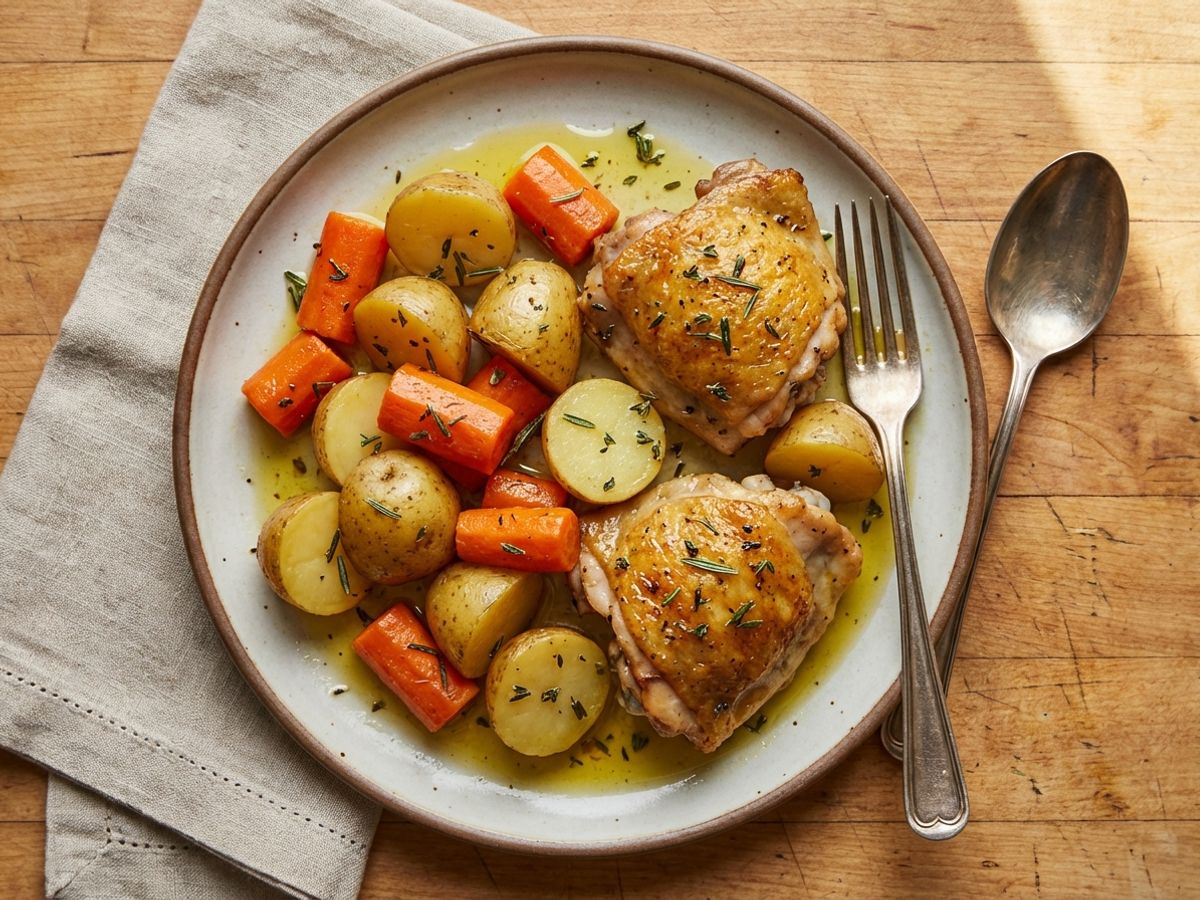
Chicken thighs roasted with carrots and potatoes.
Ingredients
Vegetables
- 1 pound baby potatoes, halved
- 3 large carrots, peeled and cut into 1-inch pieces
- 2 tablespoons olive oil
- 1/2 teaspoon sea salt
- 1/4 teaspoon black pepper (optional)
Chicken
- 4 bone-in, skin-on chicken thighs (about 2 pounds)
- 2 tablespoons olive oil
- 1 tablespoon fresh rosemary, chopped
- 1 teaspoon fresh thyme leaves
- 1/2 teaspoon sea salt
- 1/4 teaspoon black pepper (optional)
Instructions
Prep
- Preheat your oven to 400°F (200°C).
- Line a large sheet pan (half-sheet pan, 18x13 inches) with parchment paper.
- Pat the chicken thighs dry with paper towels.
Season
- In a large bowl, toss the potatoes and carrots with 2 tablespoons olive oil, salt, and pepper if using.
- In a small bowl, mix 2 tablespoons olive oil with the rosemary, thyme, salt, and pepper if using.
- Rub the herb mixture all over the chicken thighs, including under the skin if possible.
Roast
- Spread the vegetables in a single layer on the prepared sheet pan.
- Place the sheet pan in the oven and roast for 20 minutes.
- Remove the pan and nestle the chicken thighs among the vegetables, skin side up.
- Return to the oven and roast for another 25-30 minutes until the chicken reaches 165°F (74°C) internal temperature and the skin is golden and crispy.
- Let rest for 5 minutes before serving.
Tips & Substitutions
- Use fresh chicken. Buy same-day or thaw previously frozen. Freshness is key for low histamine cooking.
- Bone-in thighs stay moist. Boneless thighs or breasts cook faster, so check after 20 minutes.
- Roast the vegetables first, then add chicken so everything finishes at the same time.
- Swap baby potatoes for sweet potatoes, parsnips, or butternut squash. All roast well at 400°F (200°C).
- Pat the chicken dry before seasoning. Dry skin crisps up much better in the oven.
Why This Works
Chicken. Fresh chicken is one of the most commonly tolerated proteins. Buying same-day and cooking immediately keeps histamine levels minimal.
Potatoes. Naturally low in histamine and well tolerated by most people. They absorb the herb-seasoned pan juices for extra flavor.
Carrots. A mild, low histamine vegetable that becomes naturally sweet when roasted. Generally well tolerated.
Rosemary and thyme. Fresh herbs add robust flavor while being naturally low in histamine. They eliminate the need for premade seasoning blends or fermented sauces.
Olive oil. A well-tolerated cooking fat that works well at roasting temperatures.
Storage
Best served fresh from the oven. If you have leftovers, cool quickly and refrigerate in an airtight container, or freeze portions right away. Eat refrigerated leftovers within 24 hours. Chicken accumulates histamine during storage, and reheating does not reduce histamine, so freshness and quick storage matter most.
Not sure if an ingredient is safe? Histamine Tracker includes a database of 1,000+ foods with histamine ratings to help you cook with confidence.


For educational purposes only. Not medical advice. Consult a healthcare professional for personal guidance.
References
- Is Chicken High in Histamine? — Casa de Sante
- Are Potatoes High in Histamine? — Histamine Doctor
- Low Histamine Diet: Foods to Eat and Avoid — Wyndly
- Histamine and histamine intolerance — Maintz & Novak (2007)
- Histamine Intolerance: The Current State of the Art — Comas-Basté et al. (2020)
- Biogenic Amines in Plant-Origin Foods: Are They Frequently Underestimated in Low-Histamine Diets? — Sánchez-Pérez et al. (2021)
- Diamine Oxidase Supplementation Improves Symptoms in Patients with Histamine Intolerance — Schnedl et al. (2019)
- Histamine Intolerance — A Comprehensive Review — Jochum (2024)