 Histamine Tracker
Simple Baked Salmon

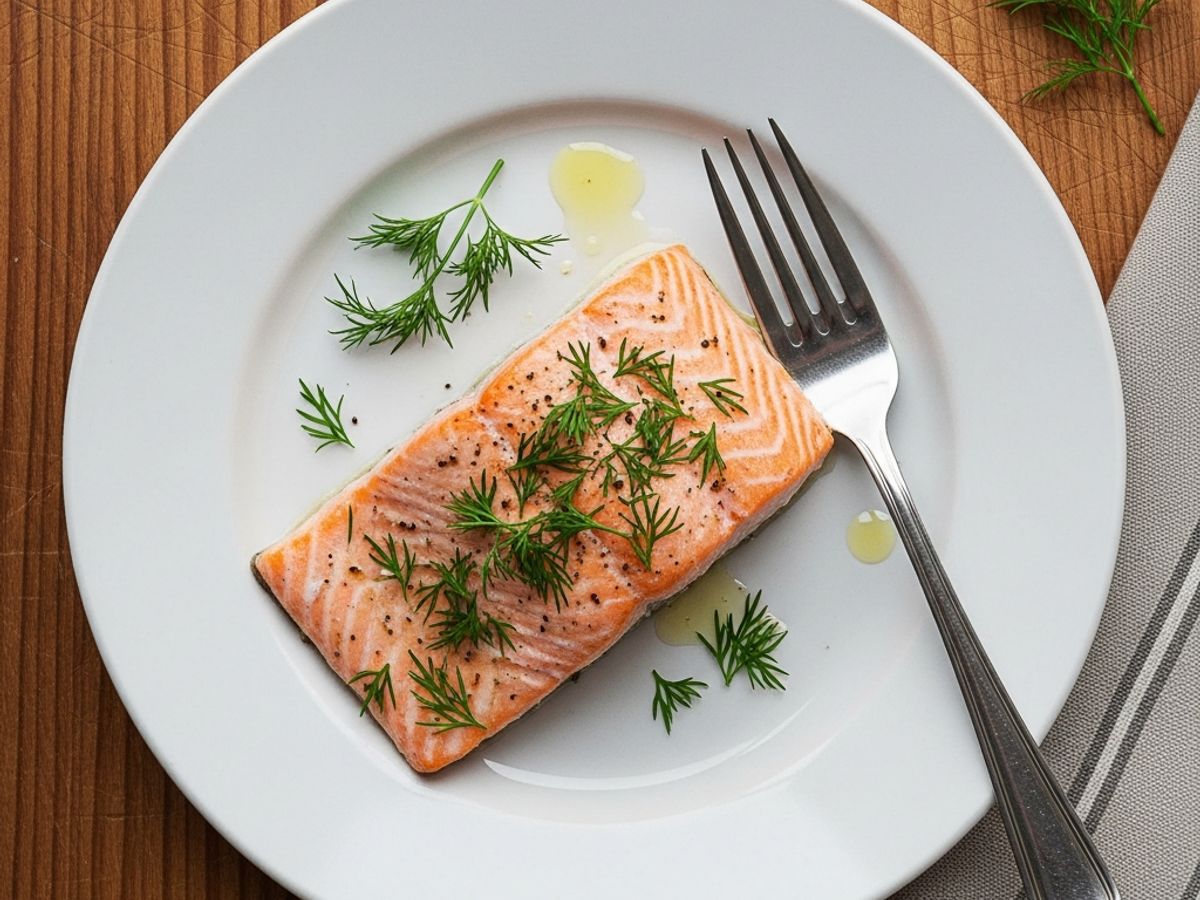
Baked salmon with olive oil and fresh dill.
Ingredients
- 2 salmon fillets (about 6 oz each), skin-on or skinless
- 2 tablespoons olive oil
- 2 tablespoons fresh dill, chopped
- 1/2 teaspoon salt
Instructions
Prep
- Preheat your oven to 400°F (200°C).
- Line a baking sheet with parchment paper.
- Pat the salmon fillets dry with paper towels. This helps the seasoning stick.
- Place the salmon on the prepared baking sheet, skin-side down if using skin-on fillets.
Season
- Drizzle the olive oil evenly over both fillets.
- Sprinkle the salt over the top.
- Press the chopped dill onto the salmon so it sticks to the oil.
Bake
- Bake for 12-15 minutes for medium (slightly pink in the center) or 15-20 minutes for well done.
- The salmon is done when it flakes easily with a fork and reaches an internal temperature of 145°F (63°C).
- Serve immediately.
Tips & Substitutions
- Frozen-at-sea salmon is often your best bet. Freshness is everything with fish. Flash-frozen salmon is often better tolerated than "fresh" counter fish that may be several days old.
- Thaw in the fridge overnight. If using frozen, thaw slowly in the refrigerator and cook the same day you thaw it.
- Swap the herbs. Parsley, chives, or fennel fronds work well instead of dill. Use whichever you have on hand.
- Butter instead of olive oil. Melted butter gives a richer finish if you tolerate dairy.
- Don't skip patting dry. Removing surface moisture helps the seasoning stick and gives the salmon a better texture.
Why This Works
Fresh salmon. Fish is one of the trickiest proteins for histamine intolerance because histamine builds up rapidly after catch. Buying frozen-at-sea or same-day fresh and cooking immediately keeps histamine as low as possible.
Olive oil. A fresh, unfermented fat that is generally well tolerated. It adds moisture and helps the herbs adhere during baking.
Fresh dill. Generally well tolerated and pairs naturally with salmon. Fresh herbs are a better choice than dried for people monitoring their histamine intake.
Simple seasoning. Just salt, oil, and one herb. Fewer ingredients means fewer potential triggers and easier tracking if you react.
Storage
Salmon is best eaten immediately after baking. Fish is especially prone to histamine buildup, so leftovers can trigger symptoms even after just a few hours. Cook only what you plan to eat in one sitting.
Not sure if an ingredient is safe? Histamine Tracker includes a database of 1,000+ foods with histamine ratings to help you cook with confidence.


For educational purposes only. Not medical advice. Consult a healthcare professional for personal guidance.
References
- Low Histamine Salmon Recipe — MastCell360 (Beth O'Hara)
- Buying Low Histamine Seafood — Alaska Gold Seafood
- Is Olive Oil High in Histamine — Casa de Sante
- Histamine and histamine intolerance — Maintz & Novak (2007)
- Histamine Intolerance: The Current State of the Art — Comas-Basté et al. (2020)
- Biogenic Amines in Plant-Origin Foods: Are They Frequently Underestimated in Low-Histamine Diets? — Sánchez-Pérez et al. (2021)
- Diamine Oxidase Supplementation Improves Symptoms in Patients with Histamine Intolerance — Schnedl et al. (2019)
- Histamine Intolerance — A Comprehensive Review — Jochum (2024)