 Histamine Tracker
Simple Stir-Fry

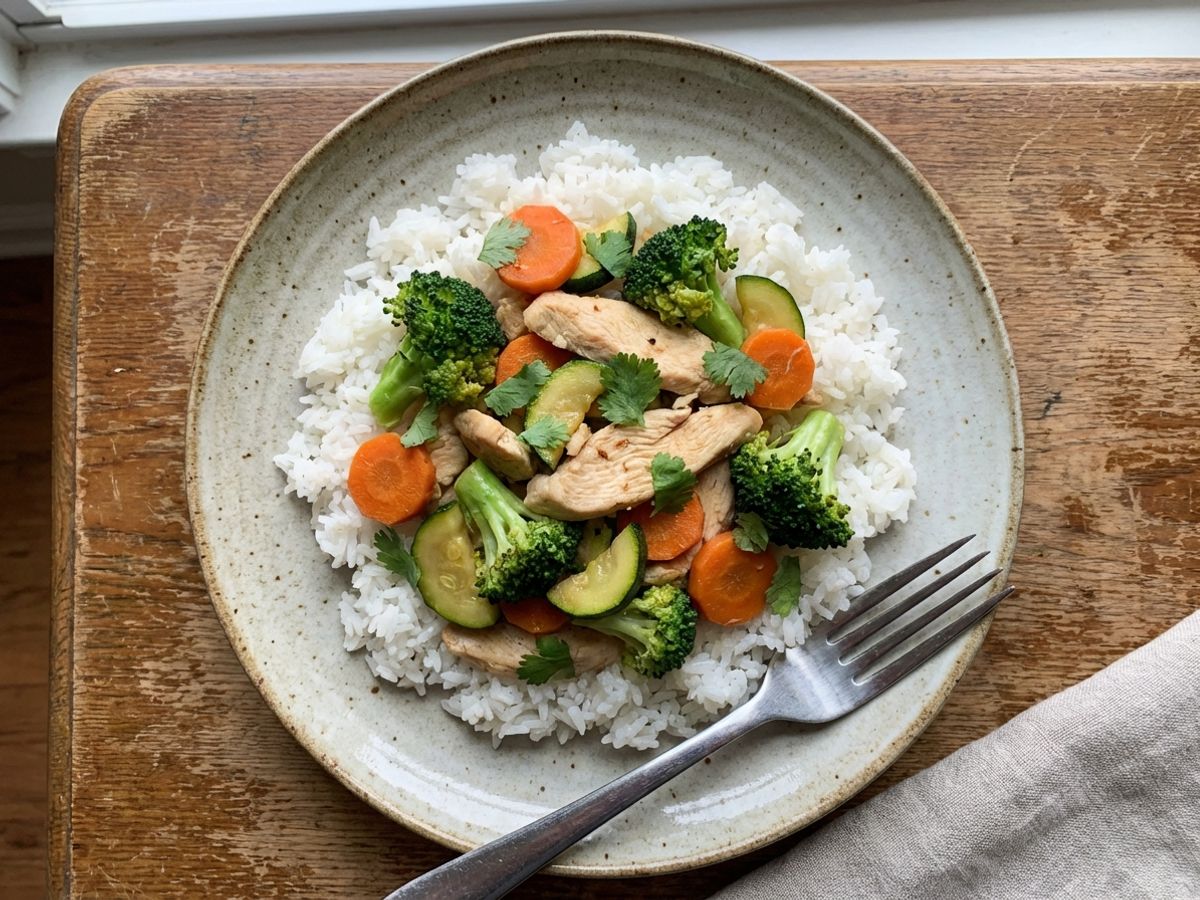
Stir-fried protein and vegetables over rice.
Ingredients
Rice
- 1 1/2 cups white rice
- 2 1/4 cups water
- 1/4 teaspoon salt
Stir-Fry
- 1 pound fresh protein (chicken, turkey, or beef), sliced thin
- 2 cups mixed vegetables (broccoli, carrots, zucchini)
- 2 tablespoons olive oil or coconut oil
- 1 tablespoon fresh ginger, minced
- 1/2 teaspoon sea salt
- Fresh cilantro for garnish (optional)
Instructions
Cook the Rice
- Rinse rice until water runs clear.
- Combine rice, water, and salt. Bring to a boil.
- Reduce heat, cover, and simmer 18 minutes.
- Let sit 5 minutes. Fluff with a fork.
Make the Stir-Fry
- Slice protein into thin strips for quick cooking.
- Heat oil in a large skillet or wok over high heat.
- Add protein and cook 3-4 minutes until browned. Remove and set aside.
- Add more oil if needed. Add ginger and cook 30 seconds.
- Add vegetables and stir-fry 4-5 minutes until tender-crisp.
- Return protein to the pan. Season with salt.
- Toss to combine.
Serve
- Divide rice among bowls.
- Top with stir-fry.
- Garnish with cilantro if using. Serve immediately.
Tips & Substitutions
- Use fresh protein and slice thin for quick cooking. Keep the heat high and work in batches if your pan is crowded.
- No soy sauce since it is fermented. This version uses ginger and salt for flavor. Coconut aminos are brand-dependent and often fermented, so only use them if you know you tolerate them.
- Use whatever vegetables you have. Bok choy, snap peas, and bell peppers all work well.
- Swap ginger for a pinch of ground turmeric if fresh ginger bothers you. Both add warmth without fermented sauces.
- Use a large skillet or wok. The wider the pan, the better the sear. Crowding the pan causes steaming instead of stir-frying.
Why This Works
Fresh protein. Whether chicken, turkey, or beef, cooking fresh protein quickly over high heat minimizes histamine accumulation. Thin slicing ensures fast, even cooking.
Ginger. Fresh ginger is generally well tolerated and adds warmth and flavor. Some people find it may support digestion, though individual response varies.
Broccoli, carrots, and zucchini. All are naturally low in histamine and commonly tolerated. Quick stir-frying keeps them tender-crisp and nutritious.
White rice. One of the most well-tolerated grains. It provides a neutral base that lets the stir-fry flavors shine.
Coconut oil or olive oil. Both are well-tolerated cooking fats. Coconut oil handles high heat slightly better, making it a good choice for stir-frying.
Storage
Best served immediately while hot. If you have leftovers, cool quickly and refrigerate in an airtight container, or freeze portions right away. Eat refrigerated leftovers within 24 hours. Protein dishes accumulate histamine during storage, and reheating does not reduce histamine, so freshness and quick storage matter most.
Not sure if an ingredient is safe? Histamine Tracker includes a database of 1,000+ foods with histamine ratings to help you cook with confidence.


For educational purposes only. Not medical advice. Consult a healthcare professional for personal guidance.
References
- Low-Histamine Meat and Fish: A Complete Guide — US Wellness Meats
- Low Histamine Oils (and How to Use Them) — Through The Fibro Fog
- Is White Rice High in Histamine — Casa de Sante
- Histamine and histamine intolerance — Maintz & Novak (2007)
- Histamine Intolerance: The Current State of the Art — Comas-Basté et al. (2020)
- Biogenic Amines in Plant-Origin Foods: Are They Frequently Underestimated in Low-Histamine Diets? — Sánchez-Pérez et al. (2021)
- Diamine Oxidase Supplementation Improves Symptoms in Patients with Histamine Intolerance — Schnedl et al. (2019)
- Histamine Intolerance — A Comprehensive Review — Jochum (2024)