 Histamine Tracker
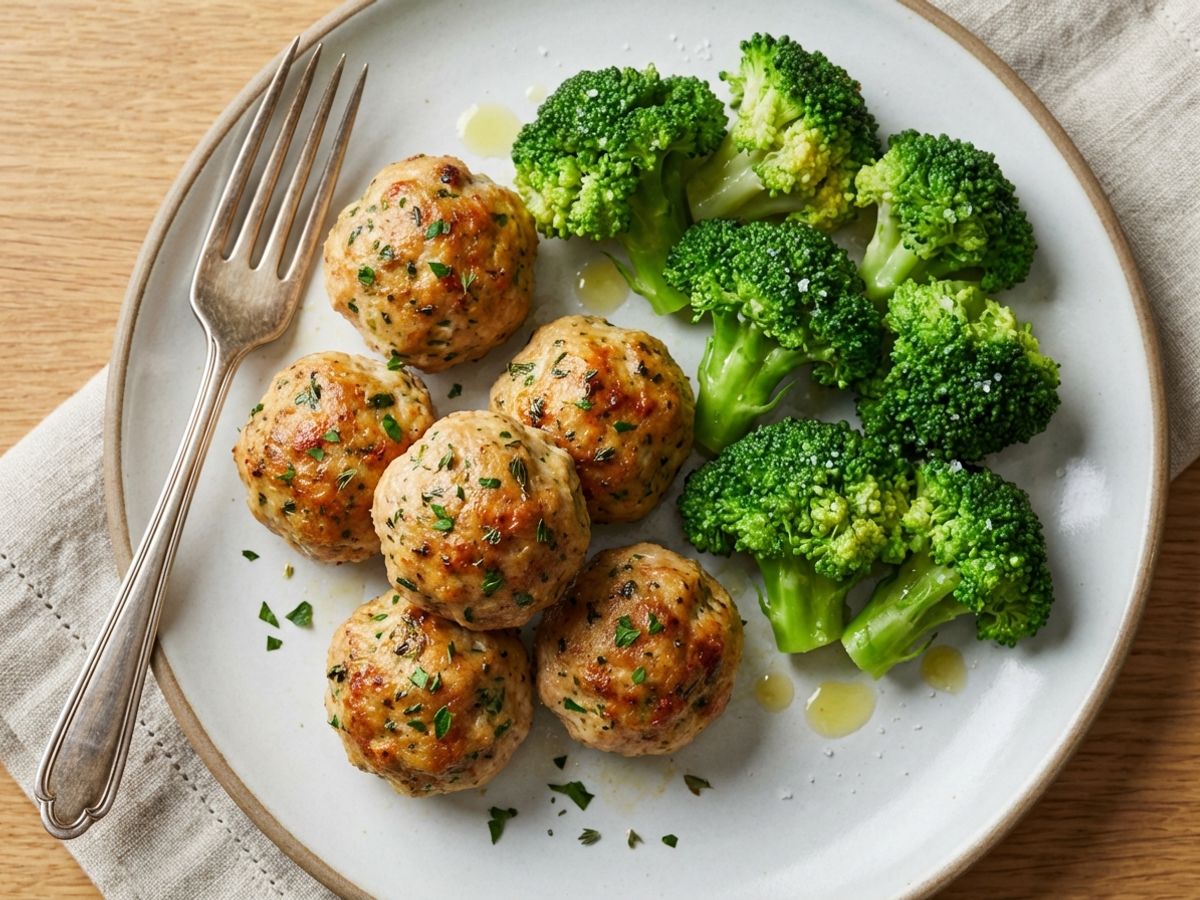
Turkey Meatballs with Steamed Broccoli

Herb turkey meatballs with steamed broccoli.
Ingredients
Meatballs
- 1 pound fresh ground turkey
- 2 tablespoons cassava flour
- 1 egg, lightly beaten
- 2 tablespoons fresh parsley, finely chopped
- 1 teaspoon fresh thyme leaves
- 1/2 teaspoon sea salt
- 1/4 teaspoon black pepper (optional)
Broccoli
- 1 pound broccoli, cut into florets
- 2 tablespoons olive oil
- 1/4 teaspoon sea salt
Instructions
Prep
- Preheat your oven to 400°F (200°C).
- Line a baking sheet with parchment paper.
- Cut the broccoli into bite-sized florets.
Make the Meatballs
- In a large bowl, combine the ground turkey, cassava flour, egg, parsley, thyme, salt, and pepper if using.
- Mix gently with your hands until just combined. Do not overmix or the meatballs will be dense.
- Form the mixture into 16 meatballs, about 1 1/2 tablespoons each.
- Place the meatballs on the prepared baking sheet, spacing them evenly.
- Bake for 18-20 minutes, rotating the pan halfway through, until the meatballs reach 165°F (74°C) internal temperature and are lightly golden.
Steam the Broccoli
- While the meatballs bake, bring 1 inch of water to a boil in a pot with a steamer basket.
- Add the broccoli florets to the steamer basket.
- Cover and steam for 4-5 minutes until bright green and tender-crisp.
- Transfer to a serving bowl and toss with olive oil and salt.
Serve
- Divide the broccoli among plates and top with meatballs.
- Serve immediately while hot.
Tips & Substitutions
- Use fresh ground turkey. Ask your butcher to grind to order if possible for maximum freshness.
- Cassava flour acts as a binder. Arrowroot starch or tapioca flour work as substitutes.
- Serve over rice or with no-tomato pasta sauce for variety.
- Don't overmix the meatball mixture. Gentle mixing with your hands keeps the texture light and tender.
- Use a cookie scoop for evenly sized meatballs. About 1 1/2 tablespoons each gives you 16 consistent meatballs.
Why This Works
Turkey. Fresh ground turkey is generally well tolerated and is one of the most common proteins in low histamine cooking. Grinding to order ensures freshness.
Broccoli. Naturally low in histamine and well tolerated by most people. Steaming preserves its nutrients and bright green color.
Eggs. Eggs are generally low in histamine, though egg whites can trigger reactions in some people. If you are sensitive, try using just the yolk as the binder.
Cassava flour. A grain-free, gluten-free binder that is well tolerated. It holds the meatballs together without needing breadcrumbs.
Fresh herbs. Parsley and thyme are naturally low in histamine and add flavor without relying on premade spice blends.
Storage
Best eaten fresh right after baking. If you have leftovers, refrigerate in an airtight container and eat within 24 hours. Meatballs are protein-dense and accumulate histamine during storage, so prompt refrigeration is important.
Not sure if an ingredient is safe? Histamine Tracker includes a database of 1,000+ foods with histamine ratings to help you cook with confidence.


For educational purposes only. Not medical advice. Consult a healthcare professional for personal guidance.
References
- Are Eggs High in Histamine? — Histamine Doctor
- What Flour Is Low Histamine? — Histamine Doctor
- Low Histamine Diet: Foods to Eat and Avoid — Wyndly
- Histamine and histamine intolerance — Maintz & Novak (2007)
- Histamine Intolerance: The Current State of the Art — Comas-Basté et al. (2020)
- Biogenic Amines in Plant-Origin Foods: Are They Frequently Underestimated in Low-Histamine Diets? — Sánchez-Pérez et al. (2021)
- Diamine Oxidase Supplementation Improves Symptoms in Patients with Histamine Intolerance — Schnedl et al. (2019)
- Histamine Intolerance — A Comprehensive Review — Jochum (2024)