 Histamine Tracker
Turkey Rice Bowl

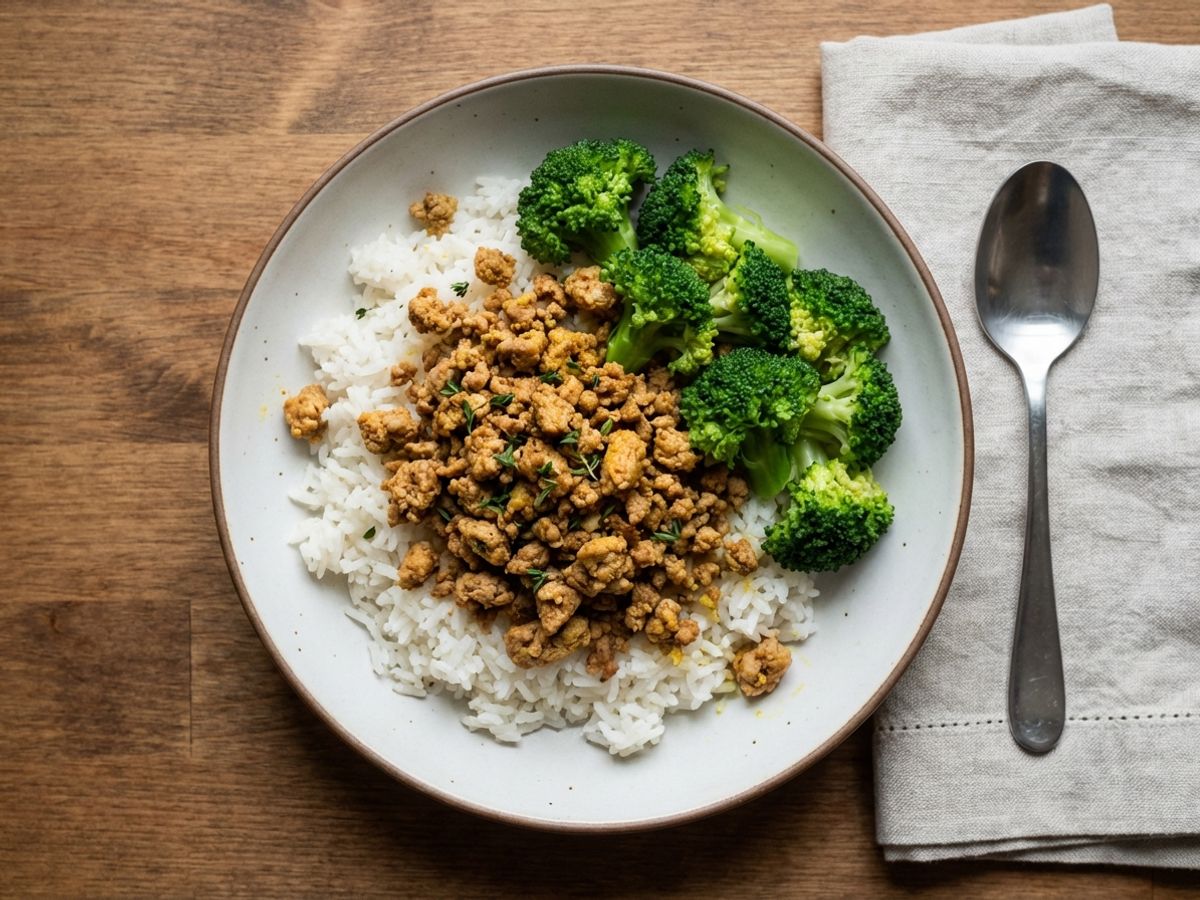
Seasoned ground turkey with steamed vegetables over rice.
Ingredients
Rice
- 1 1/2 cups white rice
- 3 cups water
- 1/2 teaspoon sea salt
Turkey
- 1 pound fresh ground turkey
- 1 tablespoon olive oil
- 1 teaspoon fresh thyme leaves
- 1/2 teaspoon sea salt
- 1/4 teaspoon black pepper (optional)
- 1/2 teaspoon ground turmeric (optional, for color)
Vegetables
- 2 cups broccoli florets
- 2 medium carrots, sliced into rounds
- 1 medium zucchini, sliced into half-moons
- 1 tablespoon olive oil
- 1/4 teaspoon sea salt
Instructions
Cook the Rice
- Rinse the rice under cold water until the water runs clear.
- Add the rice, water, and salt to a pot. Bring to a boil.
- Reduce heat to low, cover, and simmer for 15-18 minutes until the water is absorbed.
- Remove from heat and let sit covered for 5 minutes. Fluff with a fork.
Cook the Turkey
- Heat 1 tablespoon olive oil in a large skillet over medium-high heat.
- Add the ground turkey, breaking it into small pieces with a spatula.
- Season with thyme, salt, pepper if using, and turmeric if using.
- Cook for 6-8 minutes, stirring occasionally, until the turkey is cooked through (165°F / 74°C internal temperature) and lightly browned.
- Transfer to a plate and set aside.
Steam the Vegetables
- While the turkey cooks, bring 1 inch of water to a boil in a pot with a steamer basket.
- Add the carrots first and steam for 4 minutes (3 minutes if sliced very thin).
- Add the broccoli and zucchini, cover, and steam for another 4-5 minutes until all vegetables are tender-crisp.
- Transfer to a bowl and toss with 1 tablespoon olive oil and salt.
Assemble
- Divide the rice among four bowls.
- Top each bowl with turkey and steamed vegetables.
- Drizzle with additional olive oil if desired.
- Serve immediately.
Tips & Substitutions
- Use fresh ground turkey. Ask your butcher to grind it to order if possible. Ground chicken works as a substitute.
- Use whatever vegetables you have. Cauliflower, green beans, or bok choy all work in place of the suggested mix.
- Skip the pepper or turmeric if spices bother you. Salt and fresh thyme alone still make a tasty bowl.
- Swap white rice for brown rice or quinoa. Brown rice takes about 40 minutes but adds more fiber.
- Drizzle with herb oil dressing for extra flavor on top of the assembled bowl.
Why This Works
Turkey. Fresh ground turkey is one of the most commonly tolerated proteins. Cooking it immediately after purchase keeps histamine levels minimal.
White rice. Naturally low in histamine and easy to digest. It provides a neutral base that pairs well with the seasoned turkey.
Broccoli, carrots, and zucchini. All are naturally low in histamine and generally well tolerated. Steaming preserves their nutrients and keeps them tender-crisp.
Turmeric (optional). A mild spice used here mainly for color. It is generally well tolerated, though individual response varies.
Olive oil. A well-tolerated cooking fat that adds richness to both the turkey and the vegetables without needing dairy-based sauces.
Storage
Best eaten fresh while everything is warm. If you have leftovers, refrigerate in an airtight container and eat within 24 hours. Ground turkey accumulates histamine during storage, so prompt refrigeration and reheating are important.
Not sure if an ingredient is safe? Histamine Tracker includes a database of 1,000+ foods with histamine ratings to help you cook with confidence.


For educational purposes only. Not medical advice. Consult a healthcare professional for personal guidance.
References
- 19 Low Histamine Spices & Herbs (and How To Use Them) — Low Histamine Eats
- 8 Low Histamine Root Vegetables: Safe Choices for Your Diet — Histamine Doctor
- Low Histamine Diet: Foods to Eat and Avoid — Wyndly
- Histamine and histamine intolerance — Maintz & Novak (2007)
- Histamine Intolerance: The Current State of the Art — Comas-Basté et al. (2020)
- Biogenic Amines in Plant-Origin Foods: Are They Frequently Underestimated in Low-Histamine Diets? — Sánchez-Pérez et al. (2021)
- Diamine Oxidase Supplementation Improves Symptoms in Patients with Histamine Intolerance — Schnedl et al. (2019)
- Histamine Intolerance — A Comprehensive Review — Jochum (2024)