 Histamine Tracker
Warm Pasta Salad

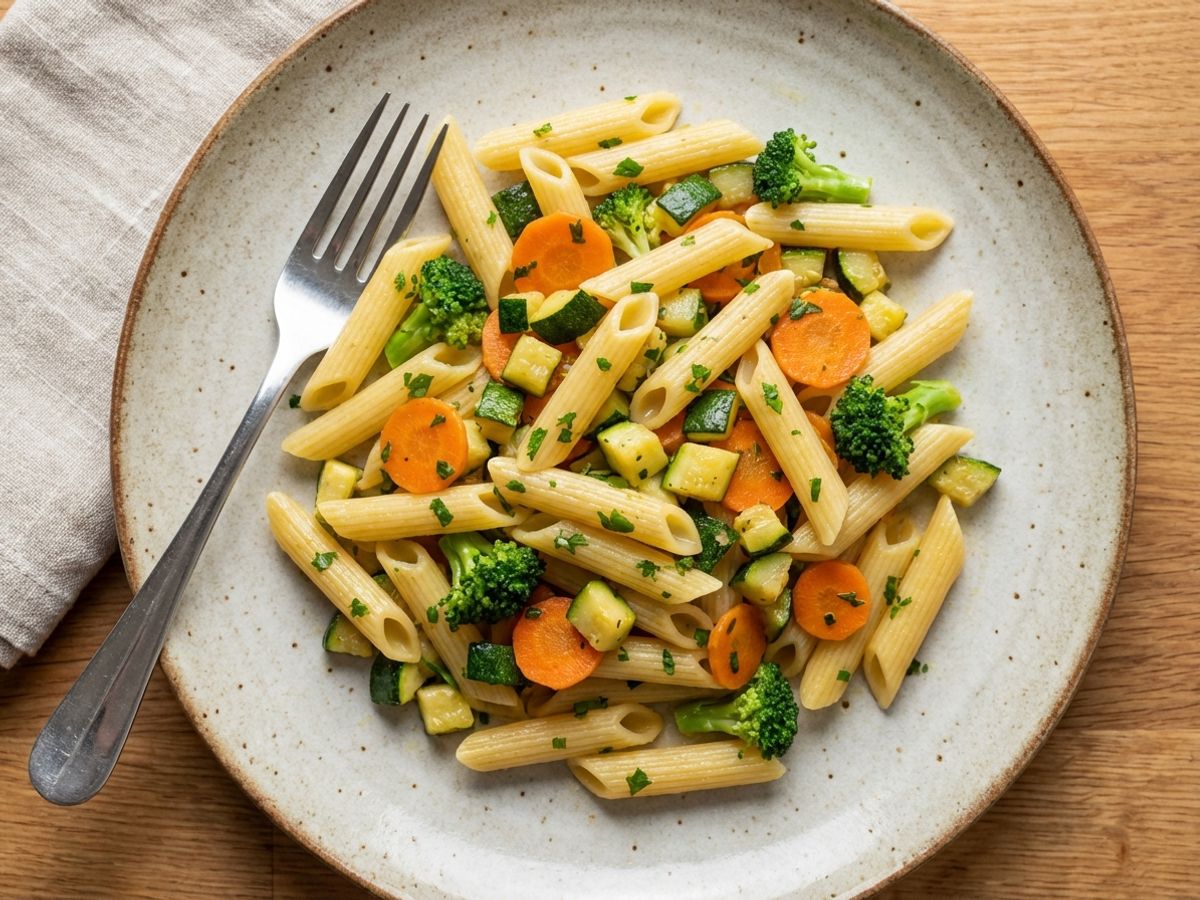
Gluten-free pasta with sauteed vegetables and herbs.
Ingredients
Pasta
- 12 ounces gluten-free pasta (penne, rotini, or fusilli)
- Water for boiling
- 1/2 teaspoon sea salt
Vegetables
- 2 cups zucchini, diced
- 1 cup carrots, thinly sliced
- 1 cup broccoli florets, cut small
- 2 tablespoons olive oil
- 1/4 teaspoon sea salt
Dressing
- 1/4 cup extra virgin olive oil
- 2 tablespoons fresh parsley, finely chopped
- 1 tablespoon fresh basil, finely chopped
- 1 tablespoon fresh chives, finely chopped
- 1/2 teaspoon sea salt
- 1/4 teaspoon black pepper (optional)
Instructions
Cook the Pasta
- Bring a large pot of water to a boil. Add 1/2 teaspoon salt.
- Cook the pasta according to package directions until al dente.
- Drain and set aside, reserving 1/4 cup of pasta water.
Saute the Vegetables
- While the pasta cooks, heat 2 tablespoons olive oil in a large skillet over medium-high heat.
- Add the carrots and cook for 3 minutes.
- Add the zucchini and broccoli. Cook for 4-5 minutes, stirring occasionally, until tender-crisp.
- Season with 1/4 teaspoon salt.
Make the Dressing
- In a small bowl, whisk together 1/4 cup olive oil, parsley, basil, chives, salt, and pepper if using.
Combine
- Add the warm pasta to the skillet with the vegetables.
- Pour the herb dressing over the pasta and toss to combine.
- Add a splash of reserved pasta water if needed to loosen.
- Toss until everything is well coated.
Serve
- Divide among plates or bowls.
- Serve immediately while warm.
Tips & Substitutions
- Rice or cassava pasta works best. Both hold up well when tossed with vegetables and dressing.
- Use whatever fresh vegetables you have. Asparagus, green beans, and snap peas are all good alternatives.
- Top with sliced fresh chicken or a fried egg for added protein.
- If you tolerate dairy, finish with very fresh mozzarella (not aged or low-moisture) or fresh ricotta. Avoid aged cheeses, which are common histamine triggers.
- Make the herb dressing while the pasta cooks. This keeps the timing efficient so everything comes together at once.
Why This Works
Gluten-free pasta. Rice or cassava-based pastas avoid the potential issues some people have with gluten. They are naturally low in histamine.
Zucchini, carrots, and broccoli. All are naturally low in histamine and generally well tolerated. Quick sauteing keeps them colorful and nutrient-rich.
Fresh herbs. Parsley, basil, and chives are naturally low in histamine and create a bright, flavorful dressing. If you are sensitive to dried herbs or spice blends, fresh versions may be easier to tolerate.
Olive oil. The base of the dressing and cooking fat. It is well tolerated and provides healthy fats without needing vinegar-based dressings, which can be high in histamine.
Storage
Best served warm right after tossing. The pasta absorbs the dressing as it sits, so it may need a splash of olive oil when reheating. Refrigerate leftovers in an airtight container and eat within 24 hours, especially if you added chicken or other protein.
Not sure if an ingredient is safe? Histamine Tracker includes a database of 1,000+ foods with histamine ratings to help you cook with confidence.


For educational purposes only. Not medical advice. Consult a healthcare professional for personal guidance.
References
- 5 Low-Histamine Noodles to Enjoy — Histamine Doctor
- Is Vinegar High Histamine? — Histamine Doctor
- Is Extra Virgin Olive Oil High in Histamine? — Casa de Sante
- Histamine and histamine intolerance — Maintz & Novak (2007)
- Histamine Intolerance: The Current State of the Art — Comas-Basté et al. (2020)
- Biogenic Amines in Plant-Origin Foods: Are They Frequently Underestimated in Low-Histamine Diets? — Sánchez-Pérez et al. (2021)
- Diamine Oxidase Supplementation Improves Symptoms in Patients with Histamine Intolerance — Schnedl et al. (2019)
- Histamine Intolerance — A Comprehensive Review — Jochum (2024)